Friday, July 29, 2011

To All My Readers & Followers:

Hello everyone!

First of all, I would like to thank those who have been visiting my blog, along with my 'followers', as you have all spurred me on to explore my passion even further!

Unfortunately, as I will only be back on Tuesday from a place without internet connection, I will DO MY BEST to post on Wednesday, the 3rd of August.

Once again, thank you all readers and 'followers'!

Ciao~

Sunday, July 24, 2011

Maserati Quattroporte


·            The Quattroporte has been around for seven years, with minor facelifts—something unusual for such a brand. Hence, when most up-market customers browse around for their luxury cars, about seventy percent overlook the Quattroporte, for S600s, 760Lis, A8 W12s, or even Panameras. Under the presence of upcoming competition, we come to see what makes the Quattroporte so good for Maserati to be able to keep up with the heat.
·             Design & Engineering:
The Quattroporte has always been, and will always be a car fit for every occasion. It is a car respected at every hotel, club, bar, the streets of Paris, London, New York—even Shanghai. From the front, the Maserati crest rests proudly on the somewhat amused face of the vehicle, as the curves on the bonnet help to accentuate the power packed engine. Portholes on the side rest on top of the cursive chrome words: Pinifarina, the exclusive Italian designer responsible for the exterior of the car. Once again, the Maserati crest rests proudly on near the rear doors. At the rear, the lights seem to be a misfit, but nevertheless get their job done. The only items that hint towards the hidden power under the luxury cruiser are four chrome tipped exhausts at the rear, along with portholes on the sides…  
·            Interior
Just getting into the car is a pleasure as one feels the supple Poltrona Frau leather, wooden clad steering wheel, leather wrapped dash; the list goes on. Everything about the Italian car is oddly German to the touch, from the buttons, to the way the steering weights in the hands. Even when cruising at insanely high speeds, one will always feel comfortably settled into the well bolstered seats. Personally speaking, I dislike the ancient like steering wheel (not including the F1 style flappy paddles), the neon green colour the buttons turn into at night, along with the gawky colour screen. At the rear, luxury is endorsed to the next level with the help of the standard BOSE speakers, buttons on the air conditioning system, spacious legroom, and for instance, a button in the center armrest, which allows the front passenger seat to move forward. After a while, one starts to savour the attention to detail placed into the vehicle.
·            Ride & Handling
The heart of the Quattroporte is a Ferrari derived 4.2 V8 engine, producing one of the most envious sounds around town. Mated to a 6-speed automatic gearbox, 0-100km/h takes a mere 5.6 seconds—mind you, the Quattroporte will sail towards 270km/h with ease. Out on the corners the four-wheel drive system kicks into place, allowing the Maserati to gobble up the corners smoothly. One would never imagine that a luxury barge mated to a Ferarri derived V8 engine would still possess a Sport button. Hit the Sport button, and a series of cogs change up, allowing a melodious Formula 1 sound to fly out of the four Tubi exhuaust.
·            Verdict
Excellence through passion—almost.

o   Pictures from:


Friday, July 15, 2011

Opel Astra Hatchback


·            Opel has been around for umpteen years, along with a range of vehicles to choose from. The most ingenious move Opel has made would be the launch of the brand new Insignia—now a global award-winning vehicle. The Astra on the other hand, is continuing a legacy paved out by its antique forefathers. We come to see if the latest Astra, (inspired by the Insignia) is worthy of its lineage. 
·             Design & Engineering:
     No doubt, if one pulls up at a red light, three things will be guaranteed. One: drivers and pedestrians alike will give the Astra a double take. Two: up against German rivals (in the same category), the fresh and bold looks of the Astra will definitely set the hatch above the rest. Three: due to the Astra’s intelligent FlexFix (a rear extension which provides a neat and simple platform for transporting a maximum of two bicycles) when on the road, others going to the beach will glance with envy. The face of the Astra has been given a cosmetic lift, shaving off messy and badly fitted areas, so that it now sport a likeable avant-garde look. From the side, the roof seems to slope upwards, providing a nice dome-like characteristic, with the help of the correct zings-and-dings of the fitting arches and sweeps. The rear: either a love-it or hate-it situation. Personally, I was hoping that the rear would follow the nice sweeping bubbly shape of the hatch. Nevertheless, the entire situation is a cut above the rest.
·            Interior
On the inside, the Astra boasts luxury equipment never seen before in its class. I reckon that the host of amenities should boost the hatch up a league. From the drivers seat, the well-fitting steering wheel fans out simple yet essential buttons. The dashboard, outline in chrome, is adequate and efficient, and the driver and passenger seats feature lumbar support, adjustable power seats, head rests with Opel crests, etc. Everything feels nice and well built to the touch. The center console comes with a (optional) CD500 screen, providing clear graphics, which display all the information one would ever want. The center console buttons are surprisingly good to the touch, and feature an array of buttons, making rivals such as the Volkswagen Golf, Spartan. An automatic emergency brake button (alike Audi’s) is wedged nicely behind the sturdy gear shifter. At night, all the buttons come alive in a sporting red glow, urging one to step on the accelerator even more.
·            Ride & Handling
Behind the wheel, steering is interestingly natural, making one feel at home on the open roads. Step on the accelerator, and the 1.4 turbo engine pushes the Astra off with a sense of urgency. Even though the Astra and its closest rival, the Golf, share the same figures, the Astra feels slightly more weighed down. Nevertheless, steering and handling are sharp, thanks to the evenly weighted body, and the Astra manages to keep its classy persona, even when thrown around in bends. Keep in mind, that the Astra is no Polo GTI, Skoda Fabia RS, etc. but more of an adequately fun cruiser. Complementing the Astra’s superb ride, is the almost Lexus-like insulation, almost forgettable with a relaxing Chris Botti CD. Indeed, the Astra might not accelerate ahead of the pack, but it will leap ahead in terms of quality, luxury, and enjoyment.
·            Verdict
100% improved, and revised. The interior can be less plasticky, and the rear design can be more appealing. Nevertheless this car should appeal to the general public in terms of build quality, reliability, and class.

o   Pictures from:

Sunday, July 10, 2011

Volkswagen Eos

·            The Eos was first launched six years ago, in order to spice up the competition between rivals such as Volvo (C70), Peugeot (307cc), etc. Interestingly enough, the majority of the market went for the latter, with a handful of the market sticking faithfully to the people’s car. Now that Volkswagen had decided to revamp the Eos, we see how they plan to keep the game going.
·             Design & Engineering:
Clearly, the Eos has gone under the knife. The face is more chiseled, and portrays a sharper front, thanks to the Phaeton style LED/Bi-Xenon headlamps, Golf-like grill, along with the proper use of chrome. Fitting 17-inch wheels are jammed into the bulging wheel arches; directly above are the new LED signal lights, indented into the wing mirrors. From the side, (with the five-piece hardtop in place) a simple yet classy dome shaped roof begins to form, as it connects with the rear of the car. Disappointingly, the rear is 100% Golf—then again, the Eos takes most of its ‘re-designed goodness’ from one of Volkswagen’s best sellers, the Golf. Before I transition on, I want to tip my hat to the ingenious five-piece, hardtop roof. It has the capabilities to transform the Eos into a coupĂ© with a panoramic sunroof, a convertible in twenty-five seconds, or any other ordinary four seater.  
·            Interior
An improvement from the 1st generation Eos. As we can see, the interior is not as Spartan as before. For starters, the steering wheel and leather feel good to the touch—considered vitals to me. In fact, the Nappa leather used, supposedly reflects heat when the roof is down. Next, there comes Volkswagen’s RNS 510 touch screen radio navigation system which snuggles comfortably into the middle of the console. A new chrome lever now leads the DSG transmission, along with new climate control switches, and a different coloured backlight for the instrument panel. At the rear, the Eos is a strict four seater, with air-conditioning as standard at the back. Overall, despite top down or up, the Eos’s cabin does a relatively good job of keeping all occupants happy.
·            Ride & Handling
The new TSI 1984cc now churns out 210BHP, 10 more than the 1st generation, which enables the Eos to accelerate from 0-->100km/h in a decent 7.8 seconds. In short, it means that when put against rivals, the Eos should be able to strive ahead of the pack, and that less fuel is consumed. Thankfully, when pushing the engine to its limits, the discouraging sound of a strained engine is not present. The six-speed gearbox used, is the same as ones used in the GTI and R models. The chassis and suspension used are firm and ideal for such a convertible. Something odd yet pleasant, is that the Eos’s handling dynamics are far from being sporty, but more so charming and rewarding. For once, I struggle to find something amiss. Nice move VW.
·            Verdict
The Eos seems to be targeted for those who enjoy relaxing drives, in cars that still manage to stop traffic. The interior could be more modern. On this lifestyle vehicle, go all out. Definitely one to take home with.

o   Pictures from:

Sunday, July 3, 2011

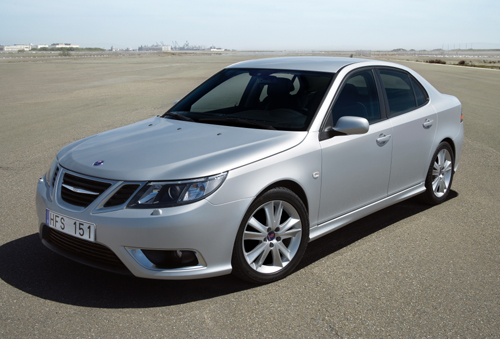
Saab, and its Future


·            Saab—a brand our parents and even grandparents might have been so familiar with in the past. In the past decade, the pace has slowed down, along with the customer appeal and quality. Now under the wings of Swedish company Spyker, we come to see what lies ahead of the only car company to be “born from jets”.

·            Boom. In the past few months, Saab has accumulated debts, limited capital investment, etc. Put it all together, and the message is clear: the Swedish automaker might disintegrate, under the right situations. So, simply summed up: how might Saab save/destroy itself?

1.     Saab has introduced a world class 9-5, using an Opel Insignia platform, along with ecotec engines.

2.     Saab plans to scrap the 9-3 in a few years, and is supposed to come up with something ‘new and zesty’.

3.     Saab has come up with yet another GM borrowed vehicle—the 9-4X, a Cadillac SRX based SUV. Not a good idea. Who would buy one? We saw the trend in the 9-7X, did we not?

4.     Phonei-X. Saab’s ‘concept’ car. Looks promising, hints of being the replacement 9-3. Impressive Saab.

5.     Special Saab editions. Very appealing, and defines the individuality of a Saab.


6.     Night Panel: displays only the necessary information on the dashboard at night. Mmm. Tasteful. 

o   Pictures from:

Saturday, June 25, 2011

Audi A1

  The saying: good things come in small packages, can be applied to the new A1. The A1 is pitched against models such as the upcoming 3rd generation A-Class (planned to be debuted in 2012), Volvo C30, Mini Cooper, etc. We see how the A1 plans to up its game.
·             Design & Engineering:
Today, we start from the side. Take in the arched roof—highlighted in contrasting aluminum, the graceful yet masculine line down the side, the optional S-Line wheels, and you come up with one word: magnifiquĂ©. At the rear, the resemblance of a kiwi is depicted, and one seems to appreciate the modern yet surreal rear, and is once again reminded of the ability of the inner beast, when the twin exhausts and words TSI are revealed. At the front, the A1 reveals a beauteous strip of LED’s, and proudly bears the 4 rings of Audi. In short, the A1 is simply bits of Audi jumbled up together, mixed in with a bit of spunk.
·            Interior
Defines expectation. At first touch, the moment you pull the door shut, that assuring German thud along with the brushed aluminum resonates quality, and is enforced by premium A8 leather, soft plastics, and sturdy knobs. As one grips the evenly rounded steering wheel, it feels sturdy, and not loose fitting—as rivals might. The steering wheel comes with an optional set of paddle shifters, along with a multitude of buttons. Air conditioning is propelled through aero-style vents, with clear-as-day buttons to adjust to your desired setting. The center console is remarkably simple for an Audi, and is highlighted in warm red at night. An optional MMI package is readily available, which includes: Bluetooth, BOSE speakers, slots for SD cards, etc. Most people wonder how anyone or anything manages to snuggle in at the rear of the A1. Answer: head and legroom are decent—even with two adults stuck at the rear. Take into consideration though, that the rear is a strict two-seater. Surprisingly, boot space is still adequate with the rear seat up, in comparison to opposition, such as MINI.   
·            Ride & Handling
The all-new 1.4TFSI engine produces a century sprint of 8.9 seconds, and 122BHP. The responsiveness one receives from the engine is simply mind-boggling, along with the smooth performance. Good job Audi, you’ve produced one of the best charismatic engines. Once the light turns green, you’ll never be at the rear end of the pack, but will sail through with ease. Out on the open roads where the A1 gets pushed, wind noise and the sound of rumbling plastics is not evident. When slinking around sharp bends and twisting roads, the miniature Audi holds true to itself with plenty of grip, and resists roll. Suspension (to me) in the A1 depends on whether one chooses the large S-line wheels, or the standard sized wheels. When I sat in the standard model, a much smoother ride was offered, compared to when I sampled the S-line version. Nevertheless, when all of the above are mixed together, the result—a sexy, sporty yet sophisticated car.
·            Verdict
Notice that the A1 is not necessarily a fun car to drive, but indeed, sophisticated. The A1 automatically labels the driver as one who enjoys modern looks, luxury, and class; whereas a Mini would resonate: funky & fun. MMI should come standard—a pity. Love the dashingly good looks, the fine quality of materials, and the array of colours to choose from.

o   Pictures from:


Saturday, June 18, 2011

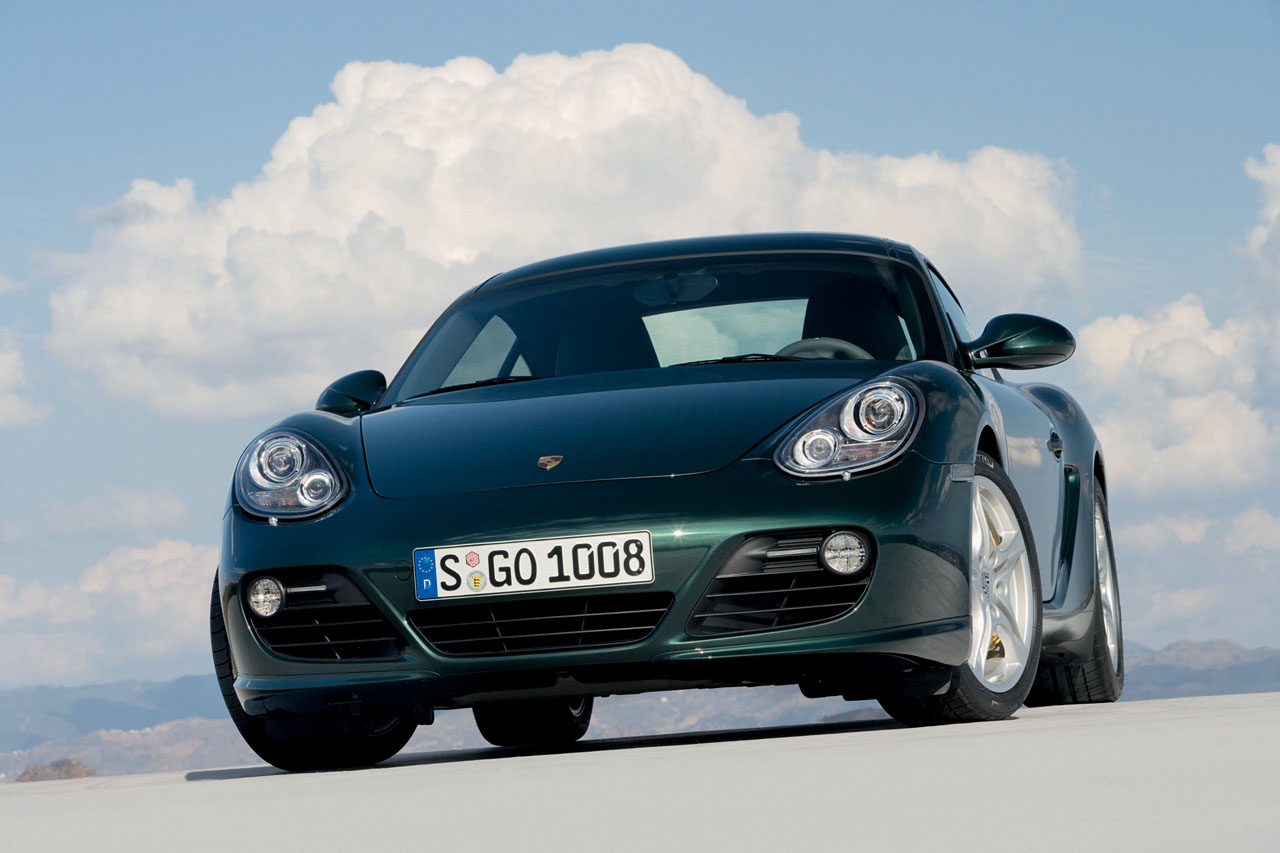
Porsche Cayman (S)


·             The Cayman has long been regarded to be a poor-man’s Porsche—an underclassman to its big sister, the 911. Now that the Cayman has been ‘souped-up’, we come to see if it has grown up…
·             Design & Engineering:
As one absorbs the Boxster like nose, the new LED strips, HID fog lamps, and Panamera like headlamps, seem to arouse your senses. Clearly, Porsche has used some of their best parts from the shared bins—telling us how much thought has been inserted into revamping the Cayman. As you move around to the sides, the same 911 ‘sweeping rear’ (C-pillar) is clearly visible, though shorter by a bit; it emphasizes what the sports car can do. Optional ceramic brakes are available, though unnecessary. The rear. As we can see, it becomes a love it or hate it situation. Personally, to me, it’s a no-go, as it exudes one word—boring. The only stimulating item happens to be the embossed ‘S’, which differentiates the 3.4-liter, flat-six Cayman S, from its 2.7-liter Tiptronic ‘lesser-siblings’. 
·            Interior
My goodness—definitely an improvement. The pre-facelift Cayman featured a relatively ‘bleak’ interior, with no such entertainment, interest, or stimulation at all. The post-facelift Cayman, along with new Porsches, has gotten rid of the Tiptronic shifters on the steering wheel, and now sports rocker switches, used to manually change gears. The standard Cayman (and Cayman S) will feature a CDR30 audio system, which has a decent colour screen. If one opts to select PCM (Porsche Management System, then a full colour, touch-screen is given—similar to the one provided in the 911 models. Once again, an optional BOSE premium sound system is available. Thanks to the revised center console and use of Alcantara, the entire interior feels much classier, and sporty to the touch.
·            Ride & Handling
On the revised Cayman S, acceleration is remarkable—especially with Porsche’s PDK, 7-speed, dual-clutch system, taken directly off a 911. With the launch control (available only when the optional Sport Chrono package is selected), acceleration from 0 ---> 100km/h, takes 4.9 seconds (0.2 seconds faster than without launch control)—exactly the same as an entry level 911. Most Cayman consumers buy the car for the superb handling—the best in its class. Throw the car in any tight bend, slick corner, or intense roads; it will always handle predictably and consistently. On B-roads, the Cayman will easily surpass its older sister—the 911. There is a Sport button available on the Cayman, which firms up the suspension, alters the characteristics of the engine, gearbox, throttle, and steering for a sportier drive. A Sport Plus button is readily available, but is recommended for smooth tarmac.
·            Verdict
Revised for the better—though, the rear needs some change. Avoid the optional ceramic brakes, unless you’re a hard-core kind of person. Tick the optional BOSE sound system, as it provides enhanced enjoyment throughout your ride. In short, the Cayman meets the status quo of a 911—almost.

o   Pictures from: