Sunday, September 25, 2011

Peugeot RCZ (1.6-Turbo, MT)


Peugeot is best known for its fabulous vans—loved by many in the industry. That being said, they have now created a coupé with the words emotion woven into it. We come to see how much emotion it can stimulate…
·             Design & Engineering:
From the front, the large bottom grill is outlined smartly in chrome, where the ends widen out, producing a Cheshire cat alike grin. To the sides of the face, are deep, hollowed out cheeks, where the fog lamps lie. At the end of the bonnet, the large Peugeot badge usually seen on delivery trucks glistens proudly on the edge, ready to face a challenge. Large curved eyes resonate hidden power and fierceness, adding on the desirability of the particular coupé. The sweeping pillar that connects roof to bonnet is made of what seems to be a cross between brushed aluminum and a gray, dull polished metal. This curve sweeps towards the rear of the vehicle—incredibly beautiful on such a car. From the side, the aerodynamic sides are well curved, with a bulging rear wheel arch, which fits the artistic 19-inch rims well. The rear is where things change a little—for the better. With a sweeping rear glass roof (think cross between Panamera and X6), a sense of balance occurs, completing the aerodynamic design and feel. The rear lights are stretched at angles, gently easing into the sheet metal. Ash gray 19-inch wheels complete the package.

·            Interior
Don’t expect much. Many critics find that Peugeot’s steering wheels are much to old fashioned, and do not provide much (if any) driver interface. In the RCZ’s case, though a flat-bottomed steering wheel is provided, it’s still gray and bare. Simple as that.  Once one looks aside that matter, the rest of the interior is almost faultless. The attention to detail for a Peugeot is relatively incredible. For instance, take the leather wrapped dash and side doors—probably the most amount of leather used in any Peugeot to date. Supportive seats prove faultless, and manage to hold one in place if attempted drifting is taken place. To maintain the luxurious feel, Peugeot has added a classy timepiece in between two air conditioning vents, all outlined in chrome. Directly above, is a display, featuring radio channel, etc. It does seem a touch old fashioned due to the old orange backlight in the background. Nevertheless, in such a car, these things seem relatively petty, as one feels focused on the road ahead, due to the powerhouse up front. Being a 2 + 2 coupé, the rear is tight. Pets, shopping, and babies would fit best in the rear. Due to the sloping rear glass roof, a rear passenger might describe his/her ride as: tight/inhumane, with a marvelous view.    

·            Ride & Handling
The heart of the RCZ, is a BMW co-developed 200 THP engine, with a considerable 200BHP. The top of the range, turbo charged 1.6-liter engine is matched with a slightly stiffer suspension setup than its lesser siblings. The six-speed manual featured in (this) the RCZ allows gear shifting as the driver feels is necessary, maximizing the 200BHP upfront due to shorter gear ratios. With the right gear selected, one will feel the difference when accelerating, compared to an automatic gearbox. Though the RCZ falls short of competition such as the Audi TT, steering is still relatively sharp. I must say that the RCZ best fits the description of: Beauty within the beast.

·            Verdict
Exterior incredibly faultless. Interior can be improved on; appreciate the extensive use of leather. 1.6-liter turbo seems fitting for such a sporty vehicle. Though not on par with the Germans, the RCZ still seems promising. There goes a check mark on emotion.

o    Pictures from:
http://www.gotbroken.com/wp-content/uploads/2009/08/2010-Peugeot-RCZ-Rear-Side-Picture.jpg

Sunday, September 18, 2011

BMW 1M


The 1-series BMW coupé/convertible has already caused sensation amongst customers. With the introduction of the first ‘affordable’ 1M, we come to see what more the 1M can offer…
·             Design & Engineering:
Take a standard 1-series Coupé. Add Bavarian tuned sports car kit from front bumper to back bumper. Widen the wheel arches. Add 19-inch wheels. Upgrade the brakes. Increase the size of the front air vents. Add quad-exhausts. Add stripes. Christen the M-badge. Really—that’s what the boffins in Bavaria have done to the originally petite 1-series Coupé. The result? A more hardcore, muscular M approved vehicle. One simply cannot help but be impressed. The rear lift has a dual purpose—it serves as a mini spoiler, yet as a brake light. Overall, the most obvious change to the car would have to be the rear. The enhanced grooves and curves for increased aerodynamics, the warning exuded from the quad exhausts, along with the M badge. 

·            Interior
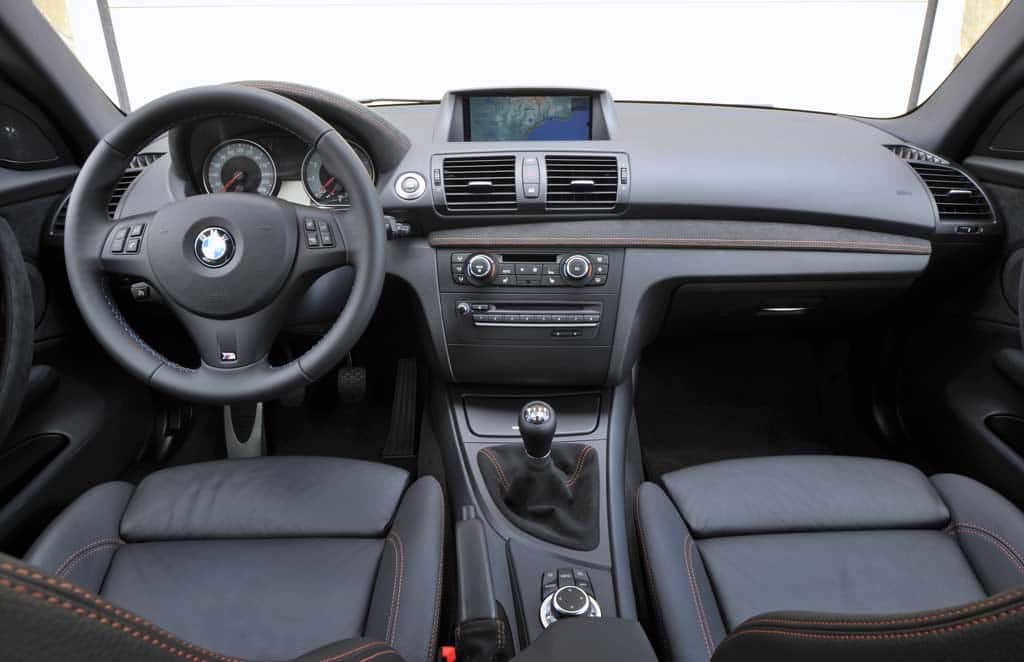
From the driver’s seat, one immediately notices the attention to detail, lovingly placed by the M-division. The Alcantara, orange stiched dashboard extends to where brushed aluminum would be. The squishy M steering wheel differs from a standard BMW steering wheel. For instance, an extra M button is featured for enhanced performance, and the leather is stiched in signature blue and orange stitching, topped off with an M badge on the bottom of the steering wheel. The speedometers are the real game changers. Unlike the standard white dials on black background, in the 1M, orange dials on a black / ash gray background reign, with the top speed reaching up till 300km/h. BMW’s intelligent i-Drive is featured in the 1M with crystal clear graphics, and connected to a Harman/Kardon sound system. Reminding one that even though an M is a power packed beast, comfort and safety is also taken into consideration. A start-stop button takes the place of a key slot, and along with automatic headlamps, etc. At the back, space is tight—no doubts about it, the 1M’s back seats are made for children, not adults. Another setback would be that no rear air conditioning is provided. Though, in such a monster, who cares about rear seat air conditioning when clinging onto your seats is much more important. Like the 1-series Coupé, rear boot space is surprisingly large enough to gobble up a golf bag or two.   

·            Ride & Handling
The powerhouse of the 1M is BMW’s renowned 3.0-liter, twin turbo charged engine, found in the 135i, 335i, 535i, 740i, X3, and X5. One thing. This already ‘hungry’ engine has the special touch from M GmbH. The elevated engine lets out a gentle, deep-throated growl, especially when starting the engine or revving it above 4000 revolutions. By the time the gearbox (auto/manual) has leaped into 4th gear, and one is soaring past competition. What I love about the engine is that in any gear and at any time, the 1M is always ready to push forward. With 340BHP on hand, the 1M still feels agile and zippy. Around tight corners, due to its small size and fantastic grip, one can zoom ahead with great confidence. Put together, the 1M is an amazing car to drive, anywhere, anytime. Indeed, good things come in small packages.

·            Verdict
Exterior—either love it or hate it, rear legroom is tight. Overall, the sporty interior, and the great engine make it more lovable. Finally, a more affordable M series vehicle for the masses.   

o    Pictures from:

Sunday, September 11, 2011

Audi A7

With the introduction of the new CLS from Mercedes-Benz, Audi has now
upped the game for the popular vehicle, by introducing their own
warrior—the new Audi A7 Sportback.
•        Design & Engineering:
Many say that with Audi’s interest in filling all niches, the A7 will
be a clear winner. Indeed, are they right. With Audi’s numerous sales
from the A5 Sportback, the A7 seems to be following the right path,
with the right people behind it all. The A7 seems to share a similar
profile with its younger sibling, the A5, albeit the better defined
elegance, and larger dimensions. From the front, hints of TT models
are available, but sport Audi’s new LED headlamps, which flank upwards
towards the sides of the vehicle. This new approach seems to make the
A7 more sinister, as if from a James Bond movie. A large variety of
rims are available on the A7, but unlike some models, the larger the
rims on the A7, the better. An optional S-Line trim is available for
the vehicle, which comes with 19-20 inch rims, a more aerodynamic
body, along with a silver-mesh interior. From the side, wide wheel
arches ooze masculinity. The sloping rear roof proves to be very
avantgarde, where the rear headlamps seem somewhat somber. Love the
proper use of chrome around the windows.
•       Interior
Audi has always been praised for making the best mass made interiors
in the auto industry. With the A7, they have taken simplicity,
comfort, and standard, to the next level. From the driver’s point of
view, the high center console creates a cockpit-like feel, especially
with the clarity and simplicity of the instrument panel. On the tested
3.0TFSI Quattro model, the speedometer reaches all the way to 300km/h,
and 8000 revolutions/minute. The ability to use exotic materials such
as wood paneling and aluminum, aids in raising the benchmarks for
rivals.   The driver’s seat is well proportioned and clad in durable
leather, offering fantastic views of the road, for an enhanced driving
experience. The center console features Audi’s improved MMI navigation
system, and comes with a touch pad next to the gear lever, which can
be used to input directions and addresses. Due to the expanding
Chinese market, the touch pad also reads the Chinese characters.
Through the MMI system, the driver has the option to select the
personality of the vehicle, displayed in four modes: comfort, auto,
dynamic, and individual, which allows one to fine tune the car’s
character. Just like the A8, the A7 (utilizes the A6 platform, just as
the A5 utilizes the A4 platform) features a magic screen, which sinks
and rises from its hiding place with the touch of a button. Being an
Audi, the standard sound system is up to notch with Mercedes-Benz, but
has the option of being improved with the optional BOSE or Bang and
Olufsen surround sound system. For a car placed in the luxury segment,
heads up display comes standard with the vehicle (depending on which
part of the globe one lives in), and does not have the tendency to
fade off in sunlight, as other car makes do. A sports grip,
intelligent steering wheel completes the touch. Back at the rear,
accommodates tall passengers, and provides plenty of head and legroom.
With such a spacious rear, the A7 would be able to accommodate a fifth
child, although it would have to be a young child. Keep in mind
though, that the A7 has been designed to seat only four passengers,
hence the two seatbelts provided at the rear. Is it not amazing how
Audi manages to build a luxury Sportback, which is about the length of
their flagship vehicle—the A8, using a mid-executive range A6
platform, while maintaining absolute comfort and spaciousness?
•       Ride & Handling
The base A7 comes with a 2.8-liter V6 engine, commonly found in the
A6. The best buy would be the 3.0-liter TFSI supercharged V6, taken
straight from the speedy S4. Gun the engine, and one gets a nice low
growl from the supercharger, and an ‘oomphy enough’ exhaust sound.
With 300BHP on hand, the cruiser is never lack of power. Even on the
toughest roads, during the toughest conditions, Audi’s renowned
Quattro four-wheel drive system will bring you home with ease. The
large sportback, feels agile enough for a car of its size, with
accurate steering and response. Being an Audi, bumps and humps will be
smoothed out even with optional 20-inch rims, due to the attention
Audi inserts into fine-tuning each and every single one of their
vehicles. The A7 is the type of cruiser, which always wants to keep
you going.
•       Verdict
An excellent rival to the CLS from Mercedes-Benz, and a considerable
one too—due to the wider range of engines, and more competitive
pricing. Lacking power? The release of an S7 should be here quite
soon.


o       Pictures from:
o       http://www.carsendse.com/2011/03/2011-audi-a7-sportback-five-door-coupe/2011-audi-a7-sportback-front-angle-3/
o       http://cars.vc/wp-content/uploads/2010/09/2012_Audi_A7_Sportback-7.jpg
o       http://www.carsession.com/photos/audi/2011-audi-a7-8.jpg.html
o       http://www.motorcarhome.com/2011/04/09/2011-audi-a7-reviews-and-pictures/audi-a7-interior-view-pictures/
o       http://www.eurocarnews.com/media/pictorials/789/3775.jpg

Friday, September 2, 2011

Bentley Continental GT

The name, Continental, has been displayed on several Bentley’s, since the early 1950’s. In 2003, the introduction of first Continental GT became Bentley’s game changer, eventually leading on to other variants, such as the Continental Flying Spur, Continental Supersports, etc. Now eight years on, the beauteous Bentley has acquired a new look—one that will probably stay around for a few more years.
·             Design & Engineering:
From the front, side and rear, one word definitely comes into play—leviathan. Indeed, from the front, the day time running lights, designed in circles, seems to pull back the face of the vehicle, pointing down towards the large twin grill. Everything on the bonnet curves and flows so evenly, yet being as balanced as yin and yang. The face of the Bentley has increased in size, and sports dark grills on the bottom that serve their purpose in breathing air, in order to feed the signature W12 engine. From the side, a fluid line births from above the front wheel arch, and ends at the door handle, and followed by another, even larger bulge from the rear wheel arch. The arches serve their purpose of imitating waves, as if the Continental were a luxury cruise on the open seas. Optional 21-inch rims, available at a cost, still manage to feel a tad small on the Bentley. Perhaps some may agree that the rear of the vehicle is the most obvious change in the Bentley. Compared to the previous generation Continental, which sported a rounded and somewhat protruded bum, the 2011 model features a slightly flat, and indented bum, with even crisper lines, and LED brake/signals, all above the two chrome exhausts. What I love about Bentleys is that no matter how gorgeous they look, they never have the desire to scream out for attention, along with the fact that there always seems to be a sort of surreal calmness surrounding the cruiser.  
·            Interior
In a world filled with technology, it has now become the standards that even vehicles require certain amounts of user-interface. Inside the Bentley, its level of craftsmanship is meticulous, with the beauty of it being how the artisans conceal all the oodles of technology with loving care. For instance, the Continental GT features leather just like every other premium brand out in the market, however the amount of time, placed into finding the perfect shade of natural leather to match the desired interior is incredible. Take the leather (again), each stitch one sees, has been hand stiched, and treated by hand. The natural wood has been searched all over the world, so as to find the perfect piece with the desired number of grains. The front console echoes the flying wings of the emblem, and is spotted once again on the steering wheel. The ‘cobra shaped’ front seats are ergonomically designed and provide more rear legroom. Everything feels good to the touch, and looks great to the eye. The engineers of the Continental were so successful, that much of their previous generation Continental is visible in the 2011 model—a good thing, considering the amount of customers who purchased Bentleys for their dream-like interior. Being a 2+2 seater, at the rear, space would usually be relatively tight. But being a leviathan, space at the rear is almost like sitting in an extended wheelbase E-Class. When the luxury seating, quietness, superb Naim audio system, adaptive suspension, touch screen satellite navigation come into play, and old-world charm arises, and fuses with the modern architecture. Probably the best reason to buy a Bentley, especially when the doorsill has these words etched clearly: Handcrafted by Bentley Motors LTD, Crewe, England. 

·            Ride & Handling
The heart of all Continentals is a W12, Phaeton derived engine, and shared with the A8 W12. The difference between the Continental’s heart and the rest? Bentley plucks the engine from Volkswagen, but nurtures it to a higher level, therefore setting the benchmarks of enjoyment, at a higher level. In a straight line, the Continental is the ultimate game changer, especially when it comes with a ‘Sport’ mode. With the 100km/h mark coming under 5 seconds, it’s easy to reach speeds of 180km/h quite eagerly, more so as the speedometer ends at a ‘mere’ 340km/h. Braking is charming in the Bentley, with an eye-opening stopping distance for a 2.3-tonne car. In the corners, due to the adaptive suspension and active cornering aids, anything becomes possible in the vehicle, without intruding into the space of comfort.

·            Verdict
Would I buy one? Of course—if they took off a few zeroes. Indeed, the revised Continental GT is a charmer, reserved purely for those in the know.

o    Pictures from: http://www.seriouswheels.com/2011/bc/2011-Bentley-Continental-GT-Interior-1920x1440.htm
o    http://znautocars.com/pictures/2011-Bentley-Continental-GT-Pictures-3.jpg
o    http://www.inautonews.com/gallery/d/40420-2/2011-Bentley-Continental-GT-05.jpg

Sunday, August 28, 2011

Volvo S80


It seems to be that Volvo really sticks to its motto: Volvo, for life. Take the XC90—an ever-popular SUV, nearing a decade of being in the market. The recently replaced S60—in the market for a good nine years. The S40—in the market since 2004. The S80 on the other hand, seems to have reached its mid-life, due to the recent facelifts. Nevertheless, the S80 still seems to be able to captivate buyers from competitors, such as BMW’s 5-series. We come to see how the S80 manages to pull its tricks—despite its age.
·             Design & Engineering:
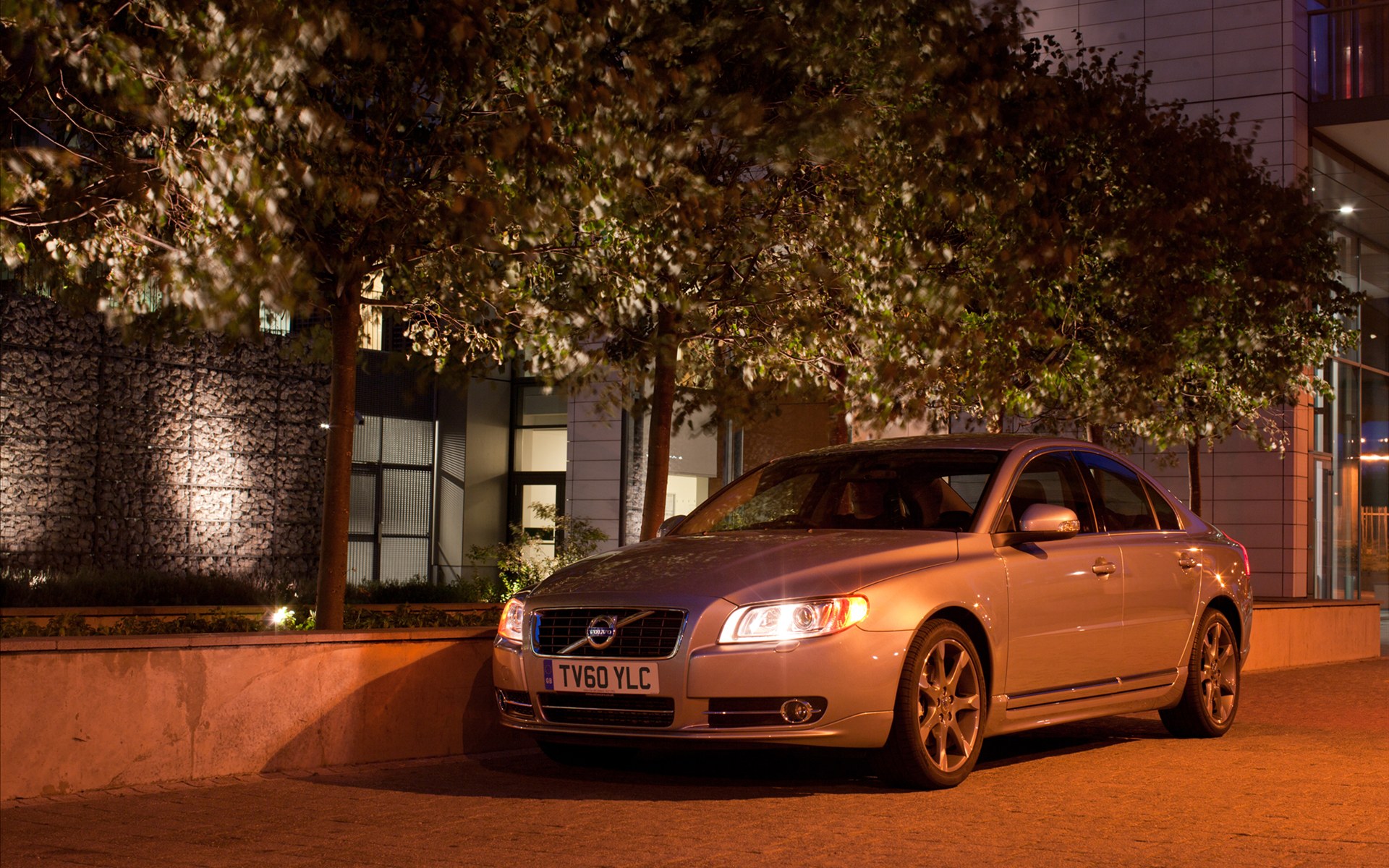
A blast from the past. Sadly, the S80 carries on the Swedish no-nonsense looks, unlike its offspring—the sexy S60. The S80 has that same clean and classic shell, which tends to attract slightly more mature customers, according to statistics and observations. Nevertheless, the Volvo succeeds in magnifying the root of its success—safety and an excellent drivetrain.  It’s this reason why the S80 is such a tantalizing dish compared to other Continental makes. The inflated Volvo crest on the front grill further enhances the rich heritage of Volvo’s commitment to safety, but seems somewhat gargantuan, considering the amount of space it occupies on the grill. From the side, the entire roof slopes down, harmoniously connecting with the bonnet—with the appropriate use of chrome. The rear boot proudly bears the 5-letter VOLVO word well, with subtle hints about the type of engine used, on the bottom right. At night, the flowing rear night-lights, fulfill their role in alerting other drivers quite well.

·            Interior
Let’s face it. The exterior might not have placed a smile on your face—the interior definitely will. Volvo’s interiors have always been something to rave about, and the S80 is no exception. The build quality. The soft leather which almost covers the entire interior. The supportive front seats and rear benches. These are only some of the S80’s charming qualities. Volvo’s interior definitely challenges BMW and Audi, in terms of minimalism and user-friendly interfaces. BMW’s intricate i-Drive system, along with Audi’s MMI system loose points in being user-friendly. In the Volvo, what you see is what you get, enabling every passenger to travel comfortably, using the multitude of simple buttons. A wide windscreen and high seating position provide the driver with superb visibility both ways, complemented by the soft-touch, curved dashboard, which all adds up to being seemingly pleasant. Though there is a slot for the key, by pressing the start/stop button, inserting the key into its desiccated slot is unnecessary. In other words, the slot can be described as a key holder, so as to avoid the nerve wrecking clanking of the key in the cubbyholes. Volvo’s classic floating console is well built, and topped up with brushed aluminum, adding a touch of class. The factory-fit stereo is superb, being built by Sweeds, for Sweeds. Being Volvo’s flagship vehicle, oodles and oodles of space are available, making rear seating comfortable, and pleasing to the eye, with the array of available different colour combinations. Of course, the space doesn’t end in the rear, but continues into the boot, which provides a cavernous 480 liters.  

·            Ride & Handling
As the world is now being faced by environmental problems, all car manufacturers are simply reducing the size of the engine and its emissions, but without reducing the power. How? Simple. The answer: turbo charging, twin-turbo charging, and even supercharging. Why the S80 now features a T4, 1.6-liter turbocharged engine, a T5, 2.0-liter turbocharged engine, along with a T6, 3.0-liter turbocharged engine. The T4 seems to sound relatively raspy and unpleasant, on top of suffering from turbo lag. The T5 is the practical choice—reaching the century sprint in 7.7 seconds, with a top speed of 230km/h. Thus, when the light changes, all one has to do is to ease gently on the accelerator. The T6 model is for the thrill seekers, providing so much power on hand, a light tap on the accelerator sends the vehicle flying off. Nevertheless, when driven like a gentleman all variants exhibit old school Swedish qualities as it glides over potholes and bumps like Disney on ice. For a car weighing over 1.6 tons, it’s fast and well balanced, with powerful and responsive brakes. Steering is responsive, with ample grip and minimal roll. Keep in mind, that the S80 still isn’t a graceful dancer.    

·            Verdict
Does one not see how the S80 impresses? Gentleman qualities, testosterone turbos, feminine comfort. Not a bad mix.

o    Pictures from:
http://www.ebestcars.co.uk/wp-content/uploads/2010/11/volvo_s80_ebestcars2.jpg?cda6c1

Sunday, August 21, 2011

Mercedes-Benz C-Class


·            Everything about the C-Class must be C, for Captivating. Mercedes-Benz hopes that buyers of the entry-level sedan, will progress onto the E-class, and finally the S-class. The 2007-2010 models just weren’t that convincing. We come to see how the revised, face-lifted C-Class plans to ‘C’aptivate buyers.
·             Design & Engineering:
Some may argue that the ‘New’ C-Class looks exactly the same as the old one (2008-2010). You’re right. Apart from replacing the projector headlamps with conventional, old-school headlamps, LED daytime running lights (and rear lights), along with the badge: BlueEfficiency. Apart from a few minor-changes, the differences are minimal, leaving me with almost nothing to write about.
·            Interior
This is where the game changer is. The materials and styling of the dashboard from the previous generation C-Class were hardly close to what one would expect from the German luxury automaker—which is why everything on the 2011 model has been stripped out and replaced. The cabin is now drastically richer and more appealing, with a sense of avant-garde and character behind every detail. The accompaniment of black paneling, chrome, and soft leather finalizes the premium portrait. Starting with the cockpit, one notices that the steering wheel has been plucked from the new CLS, complete with plush leather and sports grip—not a bad thing at all. The dashboard is also stolen from the new E-Class, with a slight change in colouration, from the E-Class’s black ash dials, to a sleek platinum gray. The center console features the (once again) same COMMAND system from the E-Class. I particularly do not appreciate the colour of the silver-gray buttons, as they are almost impossible to read! At the rear, space and comfort are adequate, and about the same as the previous generation. The base model (C180, C200, C250) does not feature a Start/stop function, whereas higher-trim models, such as the C300, and C350 with 7G-TRONIC (seven-speed automatic, buttery smooth transmission) do. Though the interior of the new C-Class may not be as sporty as rivals (3-series, A4), it definitely surpasses all in terms of luxury and comfort.
·            Ride & Handling
Powered by a range of engines, from the 1.6, and 1.8-liter BlueEfficiency engines, to the 3.5-liter BlueEfficiency engines, the new C-Class now appeals to a wider range of consumers. The base model, even manages to outrun the 2.0-liter BMW 3-series. At higher revolutions, the BlueEfficiency base engines still manage to maintain refinement, though non-stimulating. None of the trims set the roads on fire, but ace in handling, road cornering, along with ride comfort and cabin noise. In short, the new C-Class seems to be a straightforward, handling vehicle. The base models (C180, C200, C250), lack the renowned 7G-TRONIC transmission, and feature a 5-speed gearbox instead. This causes the gearbox to make a ‘clunky’ noise when shifting from reverse to drive, vice versa. Nevertheless, each gear change is optimized to its best.
·            Verdict
Though none of the trims might blaze a trail, it definitely provides what most rivals cannot—stature, luxury, and refinement. Apart from old-school styling, the base model C-Class manages to ‘C’onvinces and ‘C’aptivate a wider range of buyers.

o   Pictures from:
o    http://cdn.egmcartech.com/wp-content/uploads/2010/12/2012_mercedes_benz_c_class_images_007.jpg
o    http://autocar-zone.com/images/2011/07/2011-Mercedes-Benz-C-Class-C300-Sport-Sedan-Rear-Seat-Image-280x280.jpg

Tuesday, August 16, 2011

Lexus IS F


·            Most of us know Lexus to be a beauty—soft, calm, luxurious, the best of the Japanese. With the introduction of the Lexus LFA, the face lifted IS F unveils the beauty within the beast. We come to see how the IS F competes against competitors such as Audi’s RS5 Coupé. 
·             Design & Engineering:
The “F” in IS F and in LFA stands for Japan’s Fuji Speedway—symbolizing power, speed, and unrivaled class. Unfortunately, the IS F looks almost indistinguishable from the base IS 250, albeit the protruding masculine curves, purely for aerodynamic function, the unmistakable 5-liter V8 bulge on the hood, along with the unmistakable “F” badges. The IS250 appears to be quite, even somewhat humble, whereas the IS F enunciates the word: ferocious. Lexus seems to have started their own trend of LED lights, now apparent on newer models, such as the LS, IS, and CT models. From the front, the larger bulges are sure to make the car in front of you flee. The side pretty much stays the same as the base IS, apart from whatever aerodynamic tweaks. The most obvious change might be the rims—separating dark from light. From the rear, the quad exhaust seems to be a misfit, due to the wannabe sport racer design. Overall, only few would be able to differentiate an IS F, from a standard IS.
·            Interior
Not bad. The cabin marries the premium feel of high standard Japanese quality, with top notch fit and finish. The steering wheel displays two-tone colouring, F1 style flappy-paddles, once again with the proud “F” emblem. The dashboard displays only the necessary information, with the tachometer dominating most of the space. What one seems to notice is that the tachometer pushes all the way to 9000 revolutions, while the speedometer reaches a whopping 330km/h. The heavily bolstered two-tone, eight-way power seats with memory are standard Lexus treatment—which means that leather quality and stitching surpass all expectations. Like the LS, GS, and IS premium models, the IS F features a wide touch screen, along with a superb 14 speaker Mark Levinson surround sound system. At the rear though, the bench-style seating, strictly allows only two passengers to seat comfortably, while a sloping rear roof also restricts the headroom.
·            Ride & Handling
Powered by a sophisticated power-packed V8, the IS F exudes Dr.Jekyl/Mr.Hyde personalities. Every time one hits the accelerator, a different sort of response is experienced—amazing. The growl that emits from the quad-exhausts, once the tachometer needle hits 3800 rpms, has the potential to stop traffic. The IS F dances around the tarmac, and is nimble yet responsive and alert. Being a Lexus,  there are no sounds of loose fixtures or warning lights, even when the vehicle is pushed to its limits. A 417 BHP, 5-liter V8, mated to a creamy eight-speed transmission—as sweet as strawberry pavolas.  
·            Verdict
Loving the way it moves; not loving the way it looks.

o   Pictures from:
http://pictures.topspeed.com/IMG/crop/201003/2011-lexus-is-f-2_1280x0w.jpg