Friday, June 22, 2012

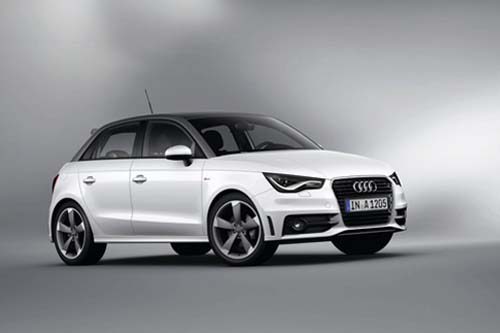
Audi A1 Sportback 1.4TFSI S-Line


This week, I come to test a head on rival with the world famous, Mini Cooper. Due to the A1’s global success, Audi has decided to launch a 5-door, sportback version.
·             Design & Engineering:
From the front, the sportback still manages to retain its fresh and funky, youthful look and appeal from the original A1. From the side though, things start to change. For instance, the addition of two doors, and the quarter glass on the C-pillars, with contrasting roof rail colours. The five-door, model has grown 6mm taller and wider than the original model, which allows for noticeably more headroom in the rear. From the rear, the Audi looks as good as ever—perhaps even better with the extended wheelbase. The car we had came with the S-line model spec, thus coming with grayed aluminium style 18-in wheels, and an aerodynamic body kit.

·            Interior
Upfront, the dashboard is a wonder to use—simple, yet packed with oodles of features. As the exterior sports a funky and unique design, the interior sports Audi’s new ‘circular’ steering wheel and revised MMI system. In addition, the interior is highly customizable, with the option to specify the colours of the inlay panels around the air vents (shaped like those of a turbofan engine pod), center console, and doors. Other customizable areas include sporty looking and superbly supportive S-line seats with integrated head restraints and contrasting colour schemes for the seat inserts. As for the sound system, the option for an audiophile’s BOSE sound system is available, and works brilliantly with the (optional) MMI system, which reads SD cards, I-pods, and USB’S, and so on. At the rear, the sportback separates itself from its younger sibling, with the addition of a full bench seat. With the additional space, the bench can seat two adults and a child rather comfortably. Unfortunately, being a compact car, the A1 sportback does not excel too well in rear seating space area, thus strapping passengers in the back (apart from children) for long drives down the coast or for a road trip, wouldn’t be of the best idea. Overall, build quality is superb, with every thing—from the knobs, to the handles, and to the infotainment system, being properly fit and finished.
·            Ride & Handlings
Like the 3-door, the same super and turbocharged 1.4 TFSI engine powers the sportback. Compared to the base 122BHP model, the 185BHP, S-line model is noticeably livelier and robust. As Audi’s signature QUATTRO 4-wheel drive system is not available as of yet on all A1’s, the sportback’s power is sent to the front wheels. Nevertheless, the 7-speed DSG transmission works well with both engine variants, apart from a few lags in gearshifts when in lower speeds. Overall, the power source is more than enough, and provides one with a comfortable ride, nifty handling, and smile-inducing drive.

·            Verdict
In terms of perceived luxury and build quality, the A1 excels in this sector, as well as when it comes to power on tap. With an ultra modern design, highly customable interior and exterior, and 5 seats, the A1 sportback sure is providing competition for the Mini lineup.

o    Pictures from:

Friday, June 15, 2012

Mini Cooper S Roadster


Another of Mini’s new creations, we come to see how this 2 seater roadster brings out the best of Mini’s racing heritage.
·             Design & Engineering:
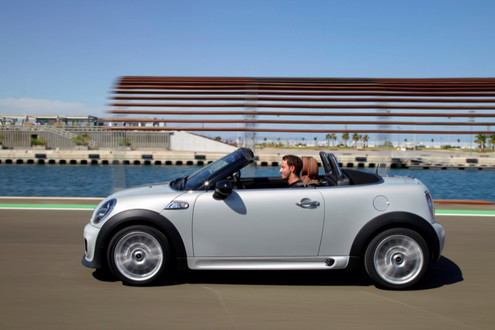
From the front, the Roadster looks the same as any other ‘S’ spec Mini. Thus, one gets the chrome accented grills and headlights, as well as the rectangular air intake on the bonnet. In short, the new ‘kid’ is distinctively Mini—steep A pillars, wheel-at-each-corner stance, as well as a rather squat stance. Only if parked next to a 4 seat Mini roadster, will one notice the Roadster’s lower stance, to be precise, by 20mm. On the rest of the exterior, there is not much to differentiate the Roadster from other Coopers, especially the recent Coupe on which the Roadster is based on. Keep in mind the minor details such as the twin chrome exhausts, retractable spoiler, and ‘S’ badges. With the top down, one can see how aesthetics and ingenuity have merged, to produce safety. As the woven-top is kept behind the anti-roll bars, the top doesn’t impinge much on the rather limited boot space. This also means that the simple structure allows for a more rigid structure to take place—a truly crucial aspect to any drop-top. Regarding exterior design once more, one can pick and choose almost any type of stripes, colours and rims that appeal to one’s personal taste. That’s the great thing about all Mini’s—that special touch of individualism.

·            Interior
Some say that the interiors of all Mini’s are the same. Aren’t they right.
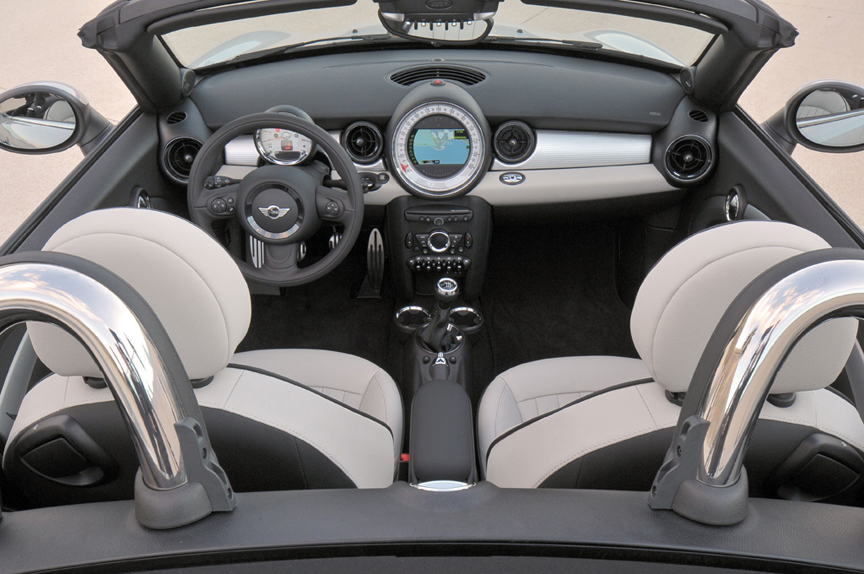
With the Roadster, Mini has simply played the same trick card, and has sewn in the same interior as the rest of the Mini lineup. This means a proper leather steering wheel, decked out with oodles of important controls such as voice command, a telephone system, and audio control system. With the speedo, Mini has made it larger than life, and has placed the on board infotainment system in the middle of it. With the infotainment system, Mini has taken the best of BMW’s i-Drive system, and has simplified it, resulting in an easy to use yet functional on board system. Depending on which options one ticks, the option for an audiophile’s Harman/Kardon sound system is available. Unfortunately, a rather plebeian central console still lies in place—with almost no change from Mini’s produced a decade ago. Hard plastic buttons and chrome switches adorn the console’s face, giving it (if I may) a rather ugly and old-fashioned feel. In addition, the latest Mini still lacks the much-needed centre glove box. In its place are still a couple of less-functional cup holders. To add on to the list of old fashion complaints, the Roadster’s fabric folding top is operated by hand! Indeed, this is where the Mini loses out to competition such as the 1-series roadster and the Golf cabriolet. The Roadster packs a decent boot space when pitched against its drop-top competitors, and provides a through-load opening for longer items, as well as the trenched style boot with an equipped cargo net.  On the whole, the cabin feels rather well put together, and still manages to feature a certain proportion of functionality and practicality, while resounding a proper German build.

·            Ride & Handlings
In its more ‘potent’ ‘S’ trim, the twin-scroll turbocharger fuels the Roadster rather vigorously. The engine of course, is the same 4-cylinder, 1600cc (with a top speed of 222km/h) engine featured in other ‘S’ Coopers. In every bit as it should be, the Roadster has a rather go-kart feel. Imagine a golf cart without a roof. Now add on a twin-scroll turbocharged 4 pot, and voila! You’ve got yourself a Roadster S. This of course means that the Mini has a rather spirited feel, with a proper gearbox (auto or manual upon specification), and a nifty steering wheel.  

·            Verdict
Remarkably, the Roadster feels just as robust as its hardtop siblings, suffering only from a bit of a rigid suspension. In short, the Roadster is a well-built, proper roadster. Unfortunately, it suffers from a bit of old-age technology, such as its center console and manual-folding top. Nevertheless the spirited engine provides absolute joy at all times. As always with all Mini’s though, the high pricing might turn one off.  

o    Pictures from:

Saturday, June 9, 2012

Volvo XC90 2.5T ‘Refresh’


One of the most significant vehicles in the world of automotive industry since 2003, we come to see how the ‘refreshed’ XC90 buys itself extra time until its replacement in 2014.
·             Design & Engineering:
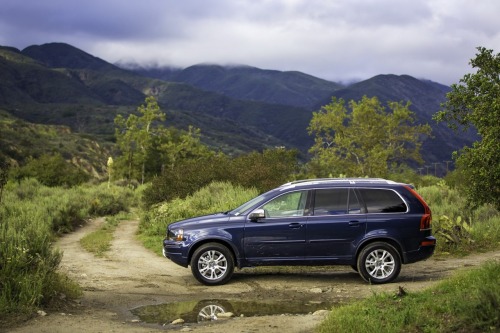
From the front, the Volvo doesn’t look noticeably different from older models. Look closer and one will see that the fog lamps double up as LED daytime running lights. The average person also won’t be able to notice the newer model’s LED tail lamps, the redesigned silver metallic bumper bar, silver roof rails, new side mouldings in matching body colour, as well as the 19-inch Galateia wheels. Nevertheless, despite Volvo’s (or per say, Geely’s) efforts to revamp the SUV, the XC90 certainly looks old. Many of the design cues are shared with older, and more angular Volvo models such as the old XC70 and S60. Nonetheless, the soccer mom SUV dominates the road with its gargantuan size, still managing to hover around with Range Rovers and Q7’s. 

·            Interior
This is where the Volvo oozes the word—practicality. Indeed, the XC90 was built to be a safe, all-rounded family transporter. Up front, the ‘Refresh’ model sports a three-spoke aluminium steering wheel, aluminium sanded inlays, as well as new dials with white back lighting. With the steering wheel, I found it exceptionally grippy—perfect for an SUV or such a massive size. Also, the new control buttons for the Bluetooth® telephony system and the audio improve the driver interaction to a higher degree. Once more, age bears itself with dignity inside the XC90. For instance, a conventional key is used to start the vehicle, and chunky black and white instrument stalks and headlight controls are still used. With the centre console, the lack of a coloured screen is the most obvious sign of age. Nevertheless, new features have been added to the audio system, such as Bluetooth® audio streaming. As for the switches, they resound the technology from the early 2000’s, producing an audible ‘click’ when pressed. Back at the middle and last row, air conditioning is standard with oodles of space to move seats around. At the rear, the knockdown seats for two medium sized adults features the same individual sound system feature from the pre-‘Refresh’ model—truly an ingenious system. As with all Volvo’s sound quality from the speakers are more than satisfactory. Bar the slight wind noise when above three digit speeds, the ‘Refreshed’ XC90 still seems to show signs of life, despite its nine-year lifespan.

·            Ride & Handlings
With the engine, Volvo hasn’t changed it. This means a choice of three engines, being the 2.5T turbocharged five-cylinder option, the 3.2-litre V6, and the road hugging V8. For the ‘Refresh’ model, Volvo has fitted the factory-backed Polestar Power Optimization kit. This ups the engine’s power from 210BHP to 240BHP. On the road, the new model certainly feels stronger in the mid-range area, picking up speeds a tad more convincingly than the 08’ 09’ models. Volvo claims that the century sprint can be achieved by ½ a second more than before, in a respectable 9.4 seconds. With the steering, I was rather disappointed, as I expected the boffins down at Polestar to spice it up. Unfortunately, it still lacks life and hardly talks to the driver at all. Keep in mind though, that when it comes to the mud, sand, snow and gravel, the four-wheel drive system mated to a 5-speed autobox saves one from any sticky situation. On the whole, ride quality is still kept along traditional Swedish guidelines, being quiet and pliant enough at all speeds.

·            Verdict
Slightly more modern looks, though not drop-dead-gorgeous. Interior still as drab yet practical as ever. As for the engines, the factory tuned Polestar engines help dramatically with performance. Still, the XC90 doesn’t seem to have much life in it left.

o    Pictures from:
o    http://www.carevos.com/wp-content/uploads/2012/02/2012-volvo-xc90-002-interior.jpg
o    http://www.play-auto.net/wp-content/uploads/2012/05/Volvo-XC90-My2012-new-official-pictures-6.jpg
o    http://www.caradvice.com.au/wp-content/uploads/2011/08/2012-volvo-xc90-11-625x468.jpg
o    http://29.media.tumblr.com/tumblr_m3knaaGBIU1qzqua1o1_500.jpg
https://blogger.googleusercontent.com/img/b/R29vZ2xl/AVvXsEhR3zECSka-iHXAAcujKvAyDFlZpao7dzcukI38ReqI_Ff5XDDdD1bTXiMcu7nTjQhw7IROMf8qIADlb9TC9slXeh5F6t3JYh5C25Tjwg5WCWLFUe0yvjAshiqCMv8JUH1GcdqEb87SGGc/s640/Wallpaper-+2013-Volvo-XC90-2.jpg

Wednesday, May 30, 2012

To All My Readers

Hi all,

Unfortunately, I will be unable to make a post this week.

Posting will resume next week.

Cheers,

CSI

Thursday, May 24, 2012

Lexus GS 350 F-Sport


Indeed. This is a follow up from the previous post. With the GS now ready for sale in (most) dealers across the world, we take a second look.
·             Design & Engineering:
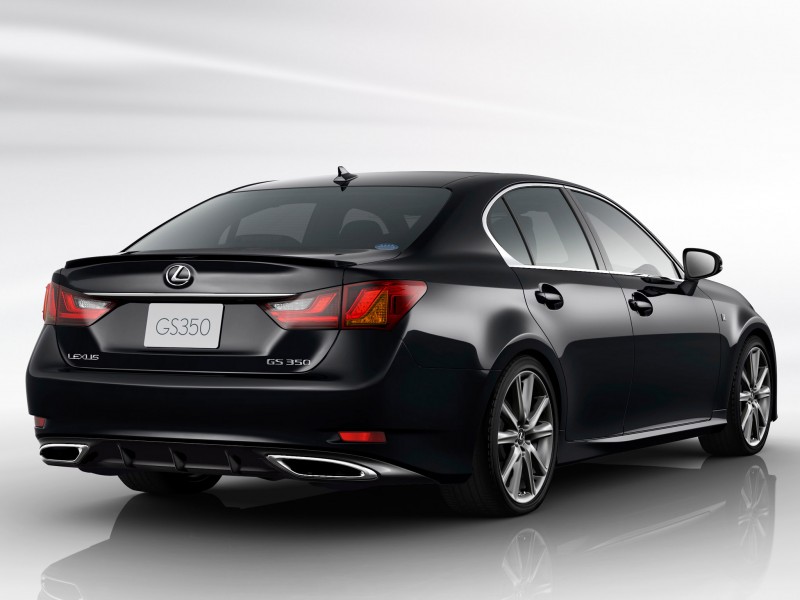
Immediately, the difference from its predecessor is noticeable. On the previous GS, the whole car had a bubbly look, whereas the 2012 GS features tauter and crisper lines, while still managing to follow Lexus’ new philosophy of L-finesse. From the front, despite being the F sport model or not, the GS 350 has an aggressive look due to the angular grille. What’s more, with the use of LED daytime running lights, the GS fits in perfectly amongst executive saloons such as the A6, 5-Series, and the E-Class. At 4850mm in length, the new GS is only 20mm longer than the previous GS, though it looks slightly shorter when compared amongst the E-Class. Nevertheless, the added length provides the Lexus with a more muscular and mature feel. On the F-model, darkened rims are provided as standard. From the rear, this is where the sedan starts to grow on me. With its new design, the car has a wider stance, commanding more respect. Also, the chrome-outlined trapezoidal exhaust and under body diffuser manage to turn on one’s masculine hormones—definitely a plus sign.

·            Interior
The engineers at Lexus challenged themselves to create an ergonomic and more spacious interior, while leaving the exterior dimensions virtually unchanged. This means that one can now experience more interior space from both the rear and front seats. In addition, the luggage area is longer and wider than the previous GS, making taking out golf bags an ease, also due to the wider boot lid. From the drivers’ perspective, one feels the need to enjoy sporty driving, thanks to the F-sport steering wheel with F1-style paddles, the sports pedals, and the brushed aluminium trim. And indeed, can one do so, thanks to the S+ (sport) button, which stiffens the suspension and quickens the throttle. I especially like the large 12.5in colour screen, with excellent graphics, navigation, etc. Coupled with the standard Mark Levinson & Dolby Digital sound system, listening to Milton Nascimento’s Mas Que Nada, seems like a live concert performance anywhere in the cabin. Again, the whole system is also very simple to use, via Lexus’ Remote Touch Interface (RTI), also found on the new RX and CT models. Luxury—an element always in the mind of Lexus engineers. Therefore, there is no cheap digital clock still found in the flagship LS model, but instead, there is a classy chrome analogue clock. Despite being under the tutelage of Toyota, the new GS uses very few interior parts from its parent company. Everything is solid yet soft, and good to the touch. Unlike its predecessor, an array of interior options, colour, and side paneling trim are available. Our test car had a heads up display, heating and cooling seats, duke blue leather, and brushed aluminium trim.

·            Ride & Handlings
The GS 350 F-Sport features a direct injection V6, delivering a powerful 316 BHP, making it more powerful on paper than the E350, 535i and the A6 3.0TFSI. Keep in mind though, that Lexus has never produced any turbocharged engines (I’m fine with that). This means that it can feel a tad lazy (if I may) at lower revs and speeds. Nevertheless, Lexus claims that the GS 350 F-Sport devours the century sprint in a respectable 6 seconds, placing it in between the 535i and the A6 TFSI. Being the F-spec model, Lexus has tweaked the GS in noticeable ways, so that the V6 is tuned to sound sportier, hence making the drive more engaging and involving overall. Apart from that, Lexus has also inserted a resonator within its air intake, so as to produce a V6 rumble and roar when past 4000 RPM, or when the driver fully opens throttle. Thus, traditional Lexus fans might find it a tad to vocal. Despite the sportier handling, the new GS hasn’t at all lost the impressive ride quality of its predecessor, and feels even more controlled and well proportioned. As always, interior noise (at the usual speeds) is always kept at a minimal, allowing one to fully soak in the melodies from the unsurpassed Mark Levinson speakers.  

·            Verdict
Clearly, Lexus has its head back in the game. With the new GS, expect it to give tough competition against rivals such as the Mercedes E-Class, BMW 5-Series and Audi A6, in terms of pricing, comfort and quality.

Lexus. The relentless pursuit of perfection.

o    Pictures from:
http://media.caranddriver.com/images/12q1/440970/2013-lexus-gs350-f-sport-ip-stack-photo-447593-s-1280x782.jpg

Thursday, May 17, 2012

Mazda CX-5


Mazda has come up with something new. Something revised. Something that its competitors (Kia Sportage, Honda CR-V, Volkswagen Tiguan…) should all watch out for. Mazda has launched its new CX-5.
·             Design & Engineering:
In the past few years, the market for SUV’s has risen dramatically. To be specific, the CUV segment. As its name implies, a CUV is a compact crossover model that features off-roader style looks and heights. To do a compare and contrast, a good example of an SUV would be a Range Rover Sport / Volvo XC90. A CUV would be more of a Volkswagen Tiguan. CUV’s have gained popularity, due to their adequate off-road capabilities (mostly used around cities) and tall stance, despite their more compact form of shape. This appeals greatly towards modern day ‘soccer mums’ who enjoy the off-road capabilities (over grassy fields to pick up the kids), and yet the compact size. Now for the CX-5, the exterior takes a step apart from its older brother—the CX-7. Now a rather popular trend, the CX-5 sports an oversized five-point grill. From the side, I find that the CUV has a staggered look—the rear seems to have a higher stance than the nose of the vehicle. Though the standard 19-in wheels (on the luxury package) provide the Mazda with a nice stance, the vehicle look clumsy and messily put together. From the rear, the CX-5 shows tell tale signs of its capabilities, through the small boot and small tailpipes. What I like about the rear though, is the nice, clean-cut rear lights, which seem to resemble pulled back eyes. On the whole, the CX-5 has a funky appearance that might not appeal to the general market.

·            Interior
Getting into the driver’s seat, one immediately notices the large steering wheel neatly adorned with multiple control buttons. I find that the splash of brushed aluminium down the middle provides the wheel with a sporty and avantgarde look. Unlike its older brother, the CX-5 has near to perfect ergonomics, thanks to well laid out controls and a highly adjustable driving position. Unlike the red dials found in earlier models, the new Mazda showcases ice white dials (frankly these appeal to me much more).  To follow suit with the fine ergonomics, the standard factory fitted touch screen stereo system with satellite navigation (comes with standard Bose speakers) is placed high upon the center console for easy reach of both the driver and the front passenger. Unfortunately, as the interior is filled with acres of black plastic, things can get rather drab after a while. Nevertheless, the exposed surfaces are made with high quality and soft-touch plastics. At the rear, the CX-5 offers reasonable amounts of head and legroom for passengers. Furthermore, rear-air conditioning vents spoil passengers, allowing them to be comfortable throughout long journeys as well. The boot also offers a wide section for luggage and golf bags, and is further enhanced by the split/fold rear seats. To sum it all up, the CX-5’s interior has surpassed interiors from the CX7, 3, 5, 7, etc. With a new and revised interior, this Mazda looks the epitome of charisma and good taste, vis-à-vis competitors.

·            Ride & Handlings
Underneath, the CX-5 features Mazda’s all new platform and engine. Based on Mazda’s new philosophy of SKYACTIV, the engine incorporates a holistic approach to enhancing efficiency. Thus, the 1988cc naturally aspirated four-pot produces a convincing 155 BHP and 200Nm—numbers that are up on Mazda’s ever popular naturally aspirated 2.0-liter found in the Mazda 5 and Mazda 6. Being a naturally aspirated 4-pot, the CX-5 speeds ahead of naturally aspirated Japanese models, with a 0-100 Km/h time of 9.5 seconds, though it lags behind European turbo-charged rivals, such as the Volkswagen Tiguan. Mated to a 6-Speed auto box, the engine can sound slightly gruff once pushed past the 130km/h mark. On the plus side, as manual shifting via the gearbox as well as through the paddle shifters on the steering wheel is available, enjoying your drive becomes ever so easy. Hurry the CX-5 into a corner, and the CUV hugs the road well enough for it to surpass even small sedans. Despite the 19-inch wheels, total ride comfort is suitable and quiet, allowing for a comfortable ride throughout.

·            Verdict
Definitely Mazda’s best efforts in years. Through exterior styling can be slightly funky an unappealing to many, the interior boasts of superior quality and features (such as the standard Bose sound system). Overall ride quality is superb, bar a few clanks over potholes. Apart from that, the CX-5 does a good job of upping the pace against rivals.

Zoom-zoom.

o    Pictures from:
http://www.blogcdn.com/www.autoblog.com/media/2011/09/lead5-2013-mazda-cx-5-qs.jpg

Sunday, May 13, 2012

Pictures of the Month

This week, I have decided to post pictures of upcoming cars with an eye on the global market. In essence, vehicles which will pitch against already existing models from rivals, and vehicles which will most likely yield very high sales on a global scale. 


Audi A1, 5 Door Sportback:

http://www.nationwidevehiclecontracts.co.uk/images/models/a1%20sportback%204.jpg


BMW 6-Series Grand Coupe: 

http://www.desertlivingtoday.com/wp-content/uploads/2011/12/bmw-6-series-gran-coupe-xl.jpg

Jaguar F-Type:
http://www.japanautostore.com/car-picture/jaguar-f-type-full-story-8.jpg


2012 Lexus GS:

http://www.autospectator.com/cars/files/images/2013-Lexus-GS-450h-006.jpg


2012 Mercedes-Benz A-Class: 

http://cdn.hypebeast.com/image/2012/03/2012-mercedes-benz-a-class-1-620x413.jpg


2013 Mercedes-Benz S-Class:

http://carsandreview.com/wp-content/uploads/2012/03/2013-Mercedes-Benz-S-Class.jpg


2012 Porsche Boxster:

http://cdn1.automobilesreview.com/2012/01/2012-Porsche-Boxster-S-644.jpg


2012 Volkswagen Beetle:

http://www.blogcdn.com/www.autoblog.com/media/2011/04/2012-beetle.jpg


2012 Volvo V40: 

http://s1.aecdn.com/images/news/gallery/2012-volvo-v40-officially-revealed-photo-gallery_4.jpg