Friday, July 27, 2012

To All My Readers

Dear all,

As I am down and out with the flu, I will be unable to post this week.

Will try to recover speedily in order to update the blog next week :)

CSI

Friday, July 20, 2012

Mercedes-Benz ML350 BlueEFFICIENCY 4MATIC


The 3rd generation ML.
·             Design & Engineering:
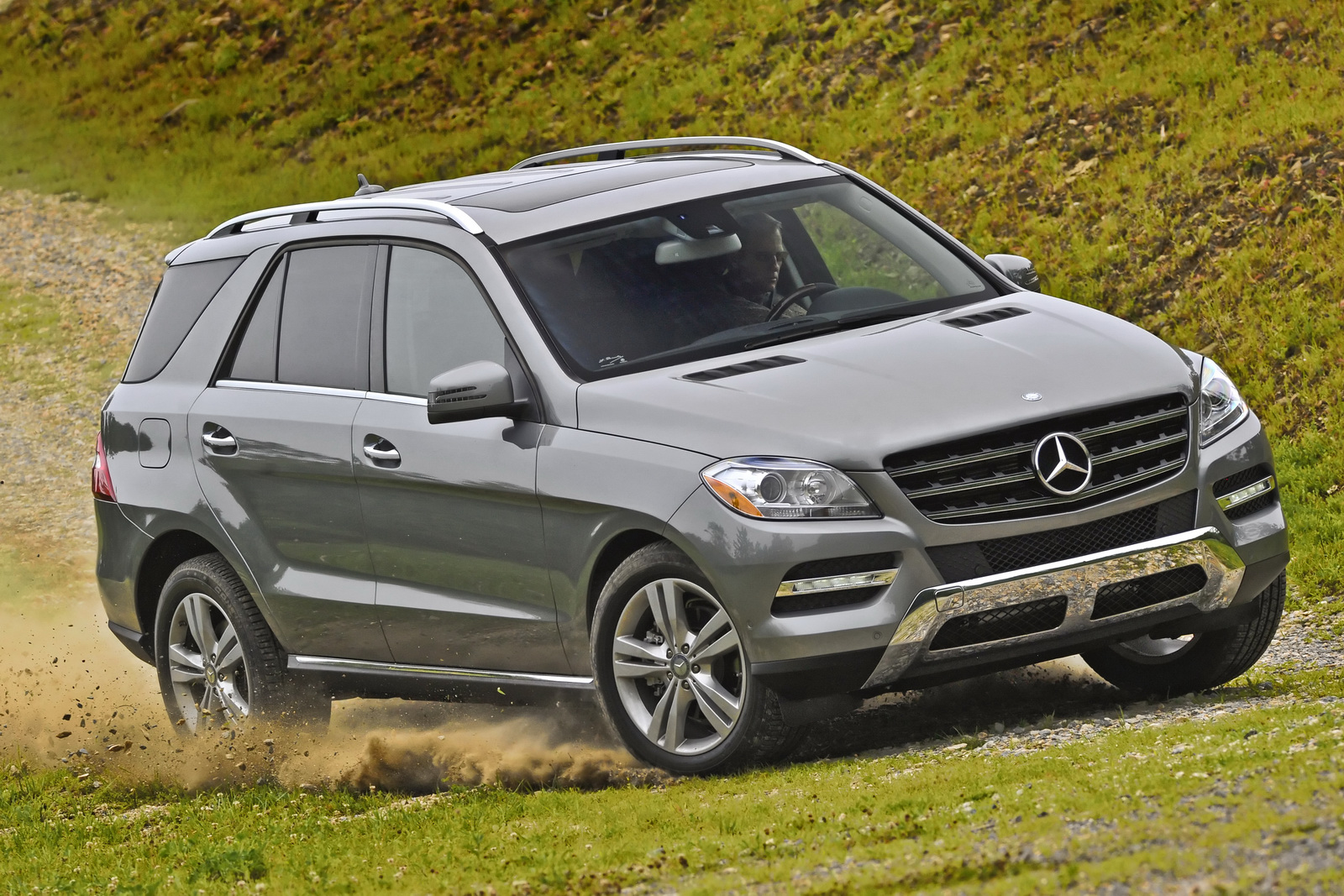
An imposing vehicle. No doubt about that. When I was in the car park a few days ago, my car was wedged in between the first and latest generation ML series vehicles. As I looked from left to right, I noticed that with time, the new ML was sharper, bolder, and undoubtedly bigger as well! From the front, the new ML bears the Mercedes-Benz crest upon a wide chrome front grill. Directly below, follows LED daytime running lights and a chrome underbody ‘battering ram’. ML diehards will say that the SUV looks rather similar to the new E-Class, failing to give it a ‘beefy appearance’. I beg to differ, for on a personal basis, the new ML imposes and dominates the roads making it rather ‘beefy’ enough for me. From the side, the SUV has a rather aerodynamic body, and is very avantgarde, with the use of sports rims, a nicely drawn curve on its side as well as the shiny roof racks and side stepping sills. At 4804mm in length, the ML definitely looks its size and manages to look like a GL from afar. From the rear, things get even sharper, with angular sides, hidden exhausts and beautifully crafted LED tail lamps. Overall, the new ML has a snobby feel about it, and redefines how a luxury SUV should look like from the outside, despite sharing a similar platform with the Jeep Grand Cherokee.
·            Interior
From a driver’s perspective, the vehicle’s high stance and large, multifunction steering wheel inspires confidence and accuracy in maneuvering the well-proportioned SUV. Turning away from the steering, the START/STOP button, telephony system, cruise control, PARKTRONIC and all the extra goodies, one realizes that everything—from the dashboard to the foothold areas all in contrasting colour stitch makes for a plush, comfortable and tasteful interior. Adopting Mercedes’ new tradition, a signal-like gear shifter is featured, though in a much simpler form. Flanking the top of the center console is the classic INFOTAINMENT system, plucked and revised from the E-Class. Unlike the E-Class though, the ML’s INFOTAINMENT system can feature a futuristic and clean-cut analogue clock when in idle mode. At the back, space is more than ample for 3 adults, with occupants guaranteed to ride in sheer comfort, due to the (optional) rear climate control adjustment, clear sound system and quiet ride. At the back, space is exceptional as well, due to the absence of third-row seating. Swathed in suede like material, simply sitting in the boot seems to be rather comfortable already. Of course, for the price you pay for the ML, an electronic boot comes as standard, making life much cleaner after an off road experience. In short, great, if not a superb interior surpassing that of a BMW X5, Lexus RX, etc.
·            Ride & Handlings
With a 3.5-liter V6 under the hood, the 306BHP powerplant does an effortless job in pulling the German built SUV forward. More relevantly, the 4MATIC 4-wheel drive system does a properly grippy job when shucked into wet corners on say, the coasts of Bristol. To be fair, the ML does shows signs of body roll—keep in mind the sheer size and dimensions of the SUV though. When talking about speed, the ML achieves 0-100km/h in a respectable 7.6 seconds, making cruising up to 3 digit speeds an ease. Mated to Mercedes’ renowned 7G-TRONIC gearbox, shifting gears is a seamless experience, be it through the automatic shifting or via the paddle shifters on the steering wheel. In addition, driver assistance systems such as BRAKE ASSIST, ATTENTION ASSIST PLUS, PARKTRONIC, and DISTRONIC PLUS, help to make driving the ML a rather easy thing to do.

·            Verdict
An improved model from the 2nd generation ML = better fuel economy, better drivability, fresher looks and a tastefully done up interior. Refined and comfortable, this is definitely the SUV to go for.

o    Pictures from:

Friday, July 13, 2012

Subaru BRZ 2.0, RWD, (A)


The BRZ/86 made its debut at the 2010 Tokyo Auto Show. Now, a good two years later, both the BRZ and the 86 have been launched. Being almost the same, we come to test the BRZ instead of the 86, just to see how the BRZ fits the bill.
·             Design & Engineering:
From the front, the BRZ sports a racing face. Angled headlamps, a large, almost Aston-Martin lookalike front grille, and multiple aerodynamic curves are etched into the Subaru’s face. Of course, this gives it a very masculine feel, and really appeals to a younger generation of ‘sporty drivers’ looking for an affordable sports vehicle. At just 1,300 mm in height, the BRZ features a low-slung silhouette typical of a sports car.  From the side, the wide front fenders seem to hide the 17-in wheels which feel a tad small for me. At the rear though, a sharp and sleek swooping rear back gives the BRZ a bit of a Lexus LFA feel—especially with the use of relatively large twin chrome-tipped exhausts. The clear tail lamps though, add an aftermarket feel to the BRZ. For die-hard Subaru fans, I believe that a BRZ STI kit should hit the markets soon. 
·            Interior
From the inside, one of the most notable characteristics of the BRZ’s interior is how driver orientated it is. From the grippy sports steering with paddle shifters, the large rev counter placed in the middle, rounded gear shifter, etc. In the center console, you get the standard, rather boring Subaru radio/FM/AM/CD player. That I must say, looks rather boring indeed. Directly below, lies the temperature settings—all kitted out with angular yet smooth brushed aluminium knobs. At the very bottom, lies the AUX-IN jack and the USB port for added comfort. On the right, one will find the start/stop button. Overall, I find that a certain level of attention has been inserted into this Subaru. Take the stitching for example. On the door panels, seats, steering wheel, handbrake, leg panels, etc, (test car leather came in black), contrasting red stitching was used in order to provide a youthful and sporty appearance and feel. At the rear, cup holders are there for rear passengers—most probably young kids or skinnier passengers. Such detail made me feel as if Subaru actually put some thought into making driving the BRZ an experience in itself, simply by sitting on the inside. As for boot space, rear knockdown seats come as standard, and can fit at least one golf bag in.
·            Ride & Handlings
Under the BRZ’S low, wide bonnet is a 2-liter Subaru boxer unit dubbed the FA. With the aid of Toyota’s D-4S direct injection system, the flat four churns out 200BHP. Despite not sounding sufficient enough for a lightweight Japanese sports car, the engine does its job rather well. Two transmission systems are available—a quick shifting manual and a more convenient 6-speed autobox. Obviously, the auto will not deliver as much performance as the manual and takes 8.2 seconds to get from a 0—100km/h, 0.6 seconds slower than the manual BRZ. Kick the Subaru into sports mode, and things can get even more enjoyable. Unfortunately, the 2.0-liter flat four is a naturally aspirated one, and loses out to competition such as the GTI. Nevertheless, as with all Boxer engines, the BRZ revs smoothly—quite nicely in fact.

·            Verdict
A cheap yet nicely fun model to drive—ignites the youthful spirit in one. Engine could be turbocharged, though we’ll have to wait for a (hopefully) STI version. Delightful. Simply delightful.

o    Pictures from:

Saturday, July 7, 2012

To All My Readers

Dear readers,

As I am attending a wedding, I will be unable to post this week.

Update soon,

CSI~

Sunday, July 1, 2012

Porsche Boxster S PDK


Being the 3rd generation Boxster, we come to see how it stands up to competition, while keeping up with its spirited racing heritage.
·             Design & Engineering:
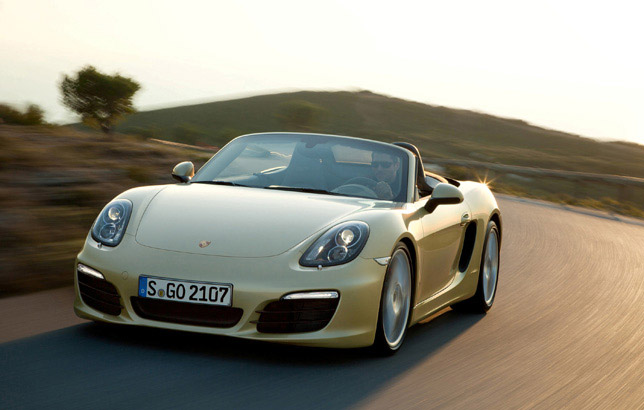
Dubbed as the 981, the new Boxster features a new lightweight body and revamped chassis, enhancing driving dynamics and performance. From the front, the new Boxster looks as if it has grown off its older brother—the new 911. Use of bi-xenon and daytime running LED’s are standard as well. Shorter overhangs make for increased aerodynamics, despite the 60mm longer wheelbase and wider tracks—40mm in the front, and 18mm at the rear. In addition, the windscreen is angled at a slightly lower position, resulting in the Boxster being 13mm lower overall. From the side, any layman will mistake the roadster as a 911 Cabriolet, for it damn well looks like one, due to the wider side air intakes, sleeker curves, and classic soft-top. From the rear, an automated (thin) spoiler pops up, and slides back down, allowing for sexy looks and smoother aerodynamics as well. Unlike the previous Boxster, the twin tailpipes are separate, allowing for a more serious sporting feel.
·            Interior
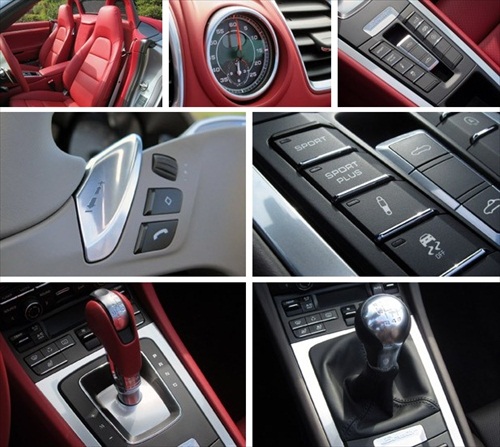
In the cockpit the Boxster’s interior has been completely redesigned in order to keep up with the more contemporary Porsche models, being the 911, Panamera and Cayenne. This means a familiar rising center console design, with inspiration from the Carrera GT. Like the 911, a large multifunction screen on the right of the rev. counter comes standard, displaying information such as G-force, lap times, oil temperature and pressure, etc. In the old Boxster, a bit of ‘manual labour’ was required in order for the soft-top to come off. The new model uses the wonders of technology, and retracts electronically with the simple pull of the rocker switch in the center console, taken from the 911 Cabriolet. As the soft-top is stored behind the passengers, it does not impede on boot space, thus eliminating the need of a convertible top compartment lid. On the whole, interior build quality and technology have both improved, thus providing for an even better driving experience.
·            Ride & Handlings
With the engines, 2.7 and 3.4-liter engines are available. With the 2.7-liter, 10BHP more power is made, when compared to the previous generation Boxster. The 3.4-liter as tested outputs 5BHP more than previously, totaling out at a 315BHP. The new model’s 0-100 km/h in 5 seconds is 0.2 seconds faster than the 5.2 seconds its predecessor posts. This slight gain in performance can be attributed to the new model’s 30kg weight reduction, rather than the additional horsepower count. Besides offering more performance, the new Boxster is more fuel efficient, saving 1-liter of petrol for every 100km driven, when compared to its predecessor. As they say, “every little bit counts!” The featured PDK system has been tweaked slightly, and has further been improved and optimized in the latest Boxster models, resulting in crisper and livelier gear changes. Despite the gleeful rumble from the twin exhausts, just like the 911, the new Boxster offers a quieter and more refined ride than its predecessor, giving it a more mature and sophisticated overall feel.      

·            Verdict
With the new model, Porsche has done a fantastic, if not superb job of maturing the Boxster. It sports simply stunning and sensational driving feels, as well as thought provoking looks. Yep, that’s a winner alright.

o    Pictures from:
http://www.financetwitter.com/wp-content/uploads/2012/03/Geneva-Motor-Show-2012-Porsche-Boxster-S-7.jpg

Friday, June 22, 2012

Audi A1 Sportback 1.4TFSI S-Line


This week, I come to test a head on rival with the world famous, Mini Cooper. Due to the A1’s global success, Audi has decided to launch a 5-door, sportback version.
·             Design & Engineering:
From the front, the sportback still manages to retain its fresh and funky, youthful look and appeal from the original A1. From the side though, things start to change. For instance, the addition of two doors, and the quarter glass on the C-pillars, with contrasting roof rail colours. The five-door, model has grown 6mm taller and wider than the original model, which allows for noticeably more headroom in the rear. From the rear, the Audi looks as good as ever—perhaps even better with the extended wheelbase. The car we had came with the S-line model spec, thus coming with grayed aluminium style 18-in wheels, and an aerodynamic body kit.

·            Interior
Upfront, the dashboard is a wonder to use—simple, yet packed with oodles of features. As the exterior sports a funky and unique design, the interior sports Audi’s new ‘circular’ steering wheel and revised MMI system. In addition, the interior is highly customizable, with the option to specify the colours of the inlay panels around the air vents (shaped like those of a turbofan engine pod), center console, and doors. Other customizable areas include sporty looking and superbly supportive S-line seats with integrated head restraints and contrasting colour schemes for the seat inserts. As for the sound system, the option for an audiophile’s BOSE sound system is available, and works brilliantly with the (optional) MMI system, which reads SD cards, I-pods, and USB’S, and so on. At the rear, the sportback separates itself from its younger sibling, with the addition of a full bench seat. With the additional space, the bench can seat two adults and a child rather comfortably. Unfortunately, being a compact car, the A1 sportback does not excel too well in rear seating space area, thus strapping passengers in the back (apart from children) for long drives down the coast or for a road trip, wouldn’t be of the best idea. Overall, build quality is superb, with every thing—from the knobs, to the handles, and to the infotainment system, being properly fit and finished.
·            Ride & Handlings
Like the 3-door, the same super and turbocharged 1.4 TFSI engine powers the sportback. Compared to the base 122BHP model, the 185BHP, S-line model is noticeably livelier and robust. As Audi’s signature QUATTRO 4-wheel drive system is not available as of yet on all A1’s, the sportback’s power is sent to the front wheels. Nevertheless, the 7-speed DSG transmission works well with both engine variants, apart from a few lags in gearshifts when in lower speeds. Overall, the power source is more than enough, and provides one with a comfortable ride, nifty handling, and smile-inducing drive.

·            Verdict
In terms of perceived luxury and build quality, the A1 excels in this sector, as well as when it comes to power on tap. With an ultra modern design, highly customable interior and exterior, and 5 seats, the A1 sportback sure is providing competition for the Mini lineup.

o    Pictures from:

Friday, June 15, 2012

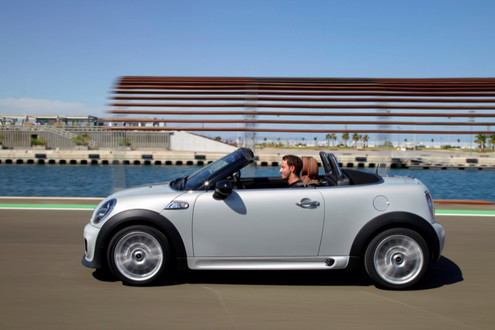
Mini Cooper S Roadster


Another of Mini’s new creations, we come to see how this 2 seater roadster brings out the best of Mini’s racing heritage.
·             Design & Engineering:
From the front, the Roadster looks the same as any other ‘S’ spec Mini. Thus, one gets the chrome accented grills and headlights, as well as the rectangular air intake on the bonnet. In short, the new ‘kid’ is distinctively Mini—steep A pillars, wheel-at-each-corner stance, as well as a rather squat stance. Only if parked next to a 4 seat Mini roadster, will one notice the Roadster’s lower stance, to be precise, by 20mm. On the rest of the exterior, there is not much to differentiate the Roadster from other Coopers, especially the recent Coupe on which the Roadster is based on. Keep in mind the minor details such as the twin chrome exhausts, retractable spoiler, and ‘S’ badges. With the top down, one can see how aesthetics and ingenuity have merged, to produce safety. As the woven-top is kept behind the anti-roll bars, the top doesn’t impinge much on the rather limited boot space. This also means that the simple structure allows for a more rigid structure to take place—a truly crucial aspect to any drop-top. Regarding exterior design once more, one can pick and choose almost any type of stripes, colours and rims that appeal to one’s personal taste. That’s the great thing about all Mini’s—that special touch of individualism.

·            Interior
Some say that the interiors of all Mini’s are the same. Aren’t they right.
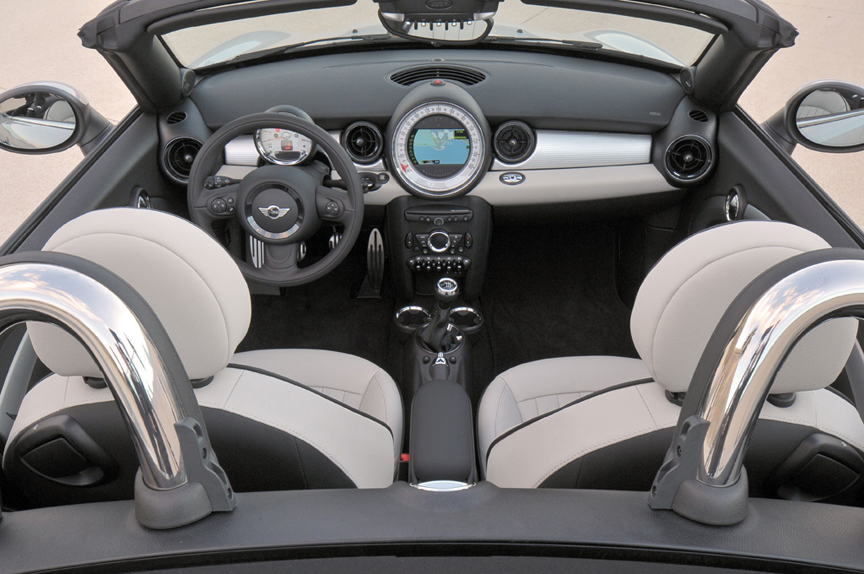
With the Roadster, Mini has simply played the same trick card, and has sewn in the same interior as the rest of the Mini lineup. This means a proper leather steering wheel, decked out with oodles of important controls such as voice command, a telephone system, and audio control system. With the speedo, Mini has made it larger than life, and has placed the on board infotainment system in the middle of it. With the infotainment system, Mini has taken the best of BMW’s i-Drive system, and has simplified it, resulting in an easy to use yet functional on board system. Depending on which options one ticks, the option for an audiophile’s Harman/Kardon sound system is available. Unfortunately, a rather plebeian central console still lies in place—with almost no change from Mini’s produced a decade ago. Hard plastic buttons and chrome switches adorn the console’s face, giving it (if I may) a rather ugly and old-fashioned feel. In addition, the latest Mini still lacks the much-needed centre glove box. In its place are still a couple of less-functional cup holders. To add on to the list of old fashion complaints, the Roadster’s fabric folding top is operated by hand! Indeed, this is where the Mini loses out to competition such as the 1-series roadster and the Golf cabriolet. The Roadster packs a decent boot space when pitched against its drop-top competitors, and provides a through-load opening for longer items, as well as the trenched style boot with an equipped cargo net.  On the whole, the cabin feels rather well put together, and still manages to feature a certain proportion of functionality and practicality, while resounding a proper German build.

·            Ride & Handlings
In its more ‘potent’ ‘S’ trim, the twin-scroll turbocharger fuels the Roadster rather vigorously. The engine of course, is the same 4-cylinder, 1600cc (with a top speed of 222km/h) engine featured in other ‘S’ Coopers. In every bit as it should be, the Roadster has a rather go-kart feel. Imagine a golf cart without a roof. Now add on a twin-scroll turbocharged 4 pot, and voila! You’ve got yourself a Roadster S. This of course means that the Mini has a rather spirited feel, with a proper gearbox (auto or manual upon specification), and a nifty steering wheel.  

·            Verdict
Remarkably, the Roadster feels just as robust as its hardtop siblings, suffering only from a bit of a rigid suspension. In short, the Roadster is a well-built, proper roadster. Unfortunately, it suffers from a bit of old-age technology, such as its center console and manual-folding top. Nevertheless the spirited engine provides absolute joy at all times. As always with all Mini’s though, the high pricing might turn one off.  

o    Pictures from: