Saturday, August 25, 2012

Sunday, August 19, 2012

BMW ActiveHybrid 5


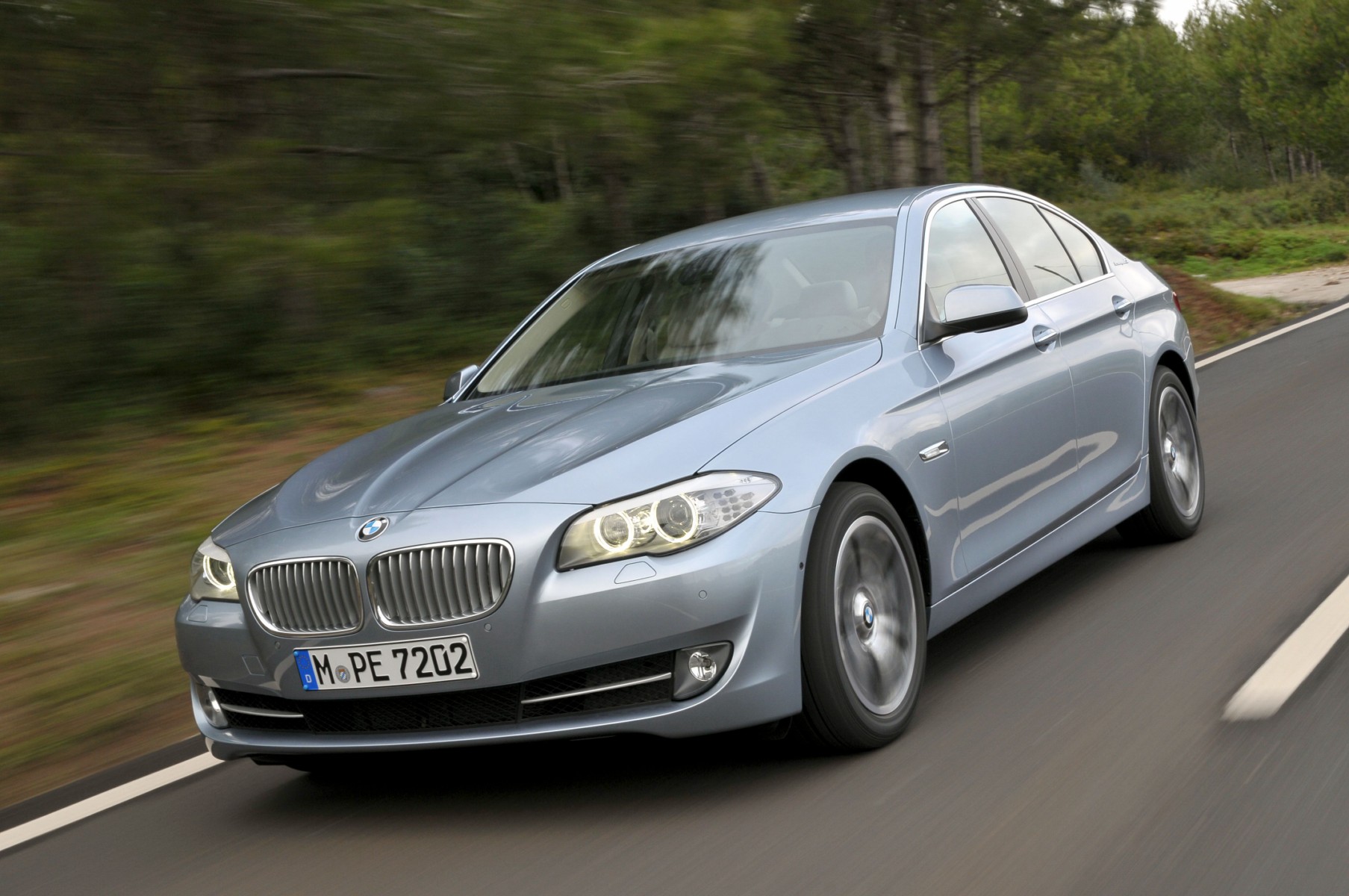
With the concept of ‘downsizing’ for eco-friendliness becoming a rather popular one, BMW takes the other road—adding a hybrid battery pack to its ever popular, twin-turbo 535i. We come to see how this new and appealing model integrates into today’s eco-friendly environment.
·             Design & Engineering:
From the front, the ActiveHybrid (let’s dub it the ‘AH’) is hardly any different from the model it is based on—the 535i. Look closer, and notice that the chrome kidney grills are replaced by galvanized ones instead. A further inspection reveals louvers placed neatly behind the grills, depicting the attention to detail placed into revising the AH, vis-à-vis aero dynamism and fuel efficiency. From the side, 17-in, 5 spoke wheels—unique to the AH model, provide aero efficiency. Still, I find that the rims look rather gaudy as they take away that special sense of sportiness found in the rest of the 5-Series lineup. At the rear, nothing changes apart from the removal of say, 535i, to ActiveHybrid 5. For amateurs, the main distinction between a normal 5 and the AH would be the obsessive use of ActiveHybrid 5 badges plastered all over the vehicle, indicating the eco-friendliness provided by the Bimmer. 
·            Interior
As usual, one gets the usual luxury treatment from BMW—paddle shifters, a telephony system, the award-winning i-Drive, and the lot. If one were to take say, a 523i, and throw in a passenger, the only noticeable difference from a passenger’s point of view between the 523i and the AH, would be the ActiveHybrid 5 badge placed right behind the 8-speed gear shifter. At the rear, passengers are still spoilt by the presence of 4-zone climate control, and enjoy ample head and legroom while settling into lush leather seats. Of course, the addition of the battery pack reduces boot space. Nevertheless, it still manages to provide ample boot space for everyday use. One thing fantastically bizarre about the AH, is the comfort access boot feature. Now featured on models such as Audi’s A6, a wiggle of one’s foot (with the key nearby) under the boot area allows the boot to flip up and down—all via BMW’s superb comfort system.   
·            Ride & Handlings
With the addition of 220kg, the AH gives out 34BHP more than the 535i, providing a lively and quick feel on straights. Mated to a smooth 8-speed gearbox, gearshifts are seamless and smooth. In Comfort Plus mode, the AH smoothens out almost all the imperfections on A or even B roads, allowing for comfortable driving at all times. One thing to point out is that when driving around town under the presence of orange, green and red lights, shudders from the engine switching between the electric motor and the petrol engine can be felt.

·            Verdict
A properly sized hybrid, capable of providing speed, comfort and eco-friendliness. Personally speaking though, I would opt for Lexus’ GS hybrid, as the Japanese have been selling and improving their hybrid systems far longer than BMW has.

o    Pictures from:

Saturday, August 11, 2012

BMW M6 Convertible 4.4 (A)


A long time ago (we’re talking more than two decades here), the first considerations of the 6-series passed through the drawing boards, eventually venturing into the depths of somebody’s drawer. Two decades later, its back—following the success of its predecessor, first launched in 2005. This time though, it’s back in an M form.
·             Design & Engineering:
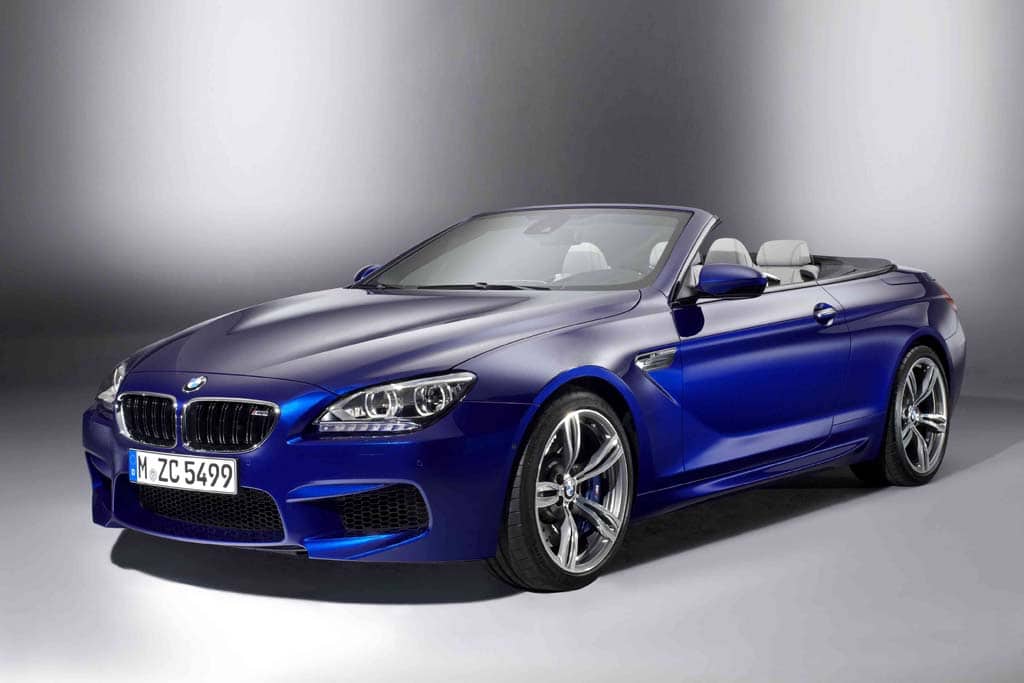
From the front, wide air intakes—outlined and tinned in black indicate the sheer power beneath the M6’s hood. Further more, BMW’s use of the redesigned ‘Angel lights’ and LED’s accentuates the sportiness and power of the Bimmer. From the side, the M6 looks sexy and appealing be it top down or up. Side skirts, M brakes (featured here in bright blue) and aerodynamic M side mirrors all come as standard. From the rear, BMW takes the standard 6-series, and beefs it up, adding four exhausts to the convertible’s rear end. Honestly, what more can I say but “wow”?
·            Interior
From the driver’s perspective, the M6 is a fantastic place to be in. Take the 3-spoke M-sports steering, featuring F1 shifter paddles and superb grip. As with all M models, the famed M sports shifter, fits nicely into the palm of one’s hand, allowing quick and melodious gearshifts at any time and place. In addition to the sporty ergonomics used in the M6 via carbon fiber trim, M buttons and the lot, attention to detail with the concept of luxury in mind appears on the inside as well. For instance, the customizable colours of the soft yet sturdy leather seats—the use of French leather stitching on the sweeping center console, and the futuristic (standard) Bang & Olufsen surround system—should one desire a change of tunes, from the quad-exhausts. At the rear, everything in swathed in leather, that I’m surprised the seat belts are still made of fiber! Unlike many other convertibles, the M-embossed rear leather seats do a great job in holding one in, as the mad driver in the driver’s seat cuts corners around the mountainous roads in the French Riviera. With the soft top, it folds away neatly, operated via a button on the center console. Easy and fuss free, one has the option to speed off in style with the top up or down at speeds up to 40km/h.
·            Ride & Handlings
Due to the era of downsizing, BMW has caught wind of it, thus downsizing the original V10 to a 4.4-liter twin turbo charged V8. Marvelous. Though I felt as if the downsized engine would disappoint me, I was tickled much the other way. The century sprint can now be done in a mere 4.3 seconds, before reaching a top speed of 250km/h. Pushing forward with so much muscle, the M6 feels as if there’s no stopping it! Keep in mind that the M6 does not have the best handling in its segment, though it still manages to fit well, providing the driver with sheer confidence to pilot the “ultimate driving machine”.   

·            Verdict
Supercar level performance, luxurious interior, rather composed. Sadly, this is still a car which fits better on the showroom floor and not parked at home on your driveway. Still, the core values of the M brand are alive and kicking.

o    Pictures from:
http://image.motortrend.com/f/40170591+w786+ar1/2012-BMW-M6-Convertible-rear-seats.jpg


Saturday, August 4, 2012

Volkswagen Beetle 1.2 TSI


An icon, reborn.
            With the launch of the new 2012 Beetle, we come to see how a legend has been reborn.

·             Design & Engineering:
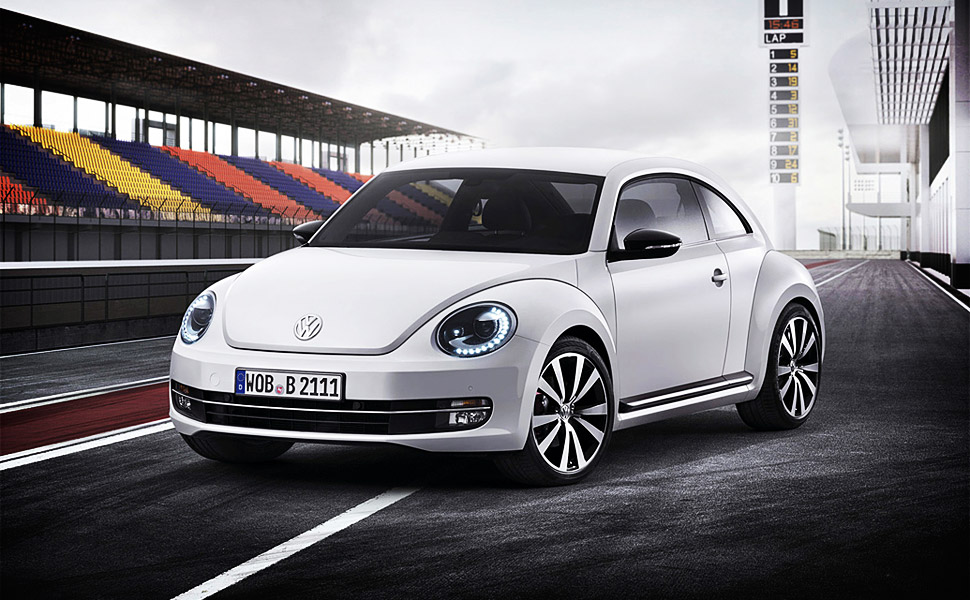
Clearly, the Beetle loses its cutesy feel, retaining a more futuristic and “cool” look. Gone are the rounded features. Gone are the bubbly edges. Instead, a more masculine front with proper bi-xenon headlamps take its place. From the side, a lower and slightly wider stance provides the bug with a proper “real-car” feel. The rear end features a steeper rear section, which adds to aerodynamic improvements, as well as 21st century looks. The rounded rear taillights have been replaced by futuristic, semi-ovals, with the distinct C-shaped VW light patterns when lit. Overall, words such as sporty, dynamic and creative can be applied to the new Beetle, making it more appealing to both men and women.
·            Interior
Enter the bug, and notice the rise in build quality and ergonomics. From the driver’s point of view, a funky three-spoke steering wheel sits in place, adorn with multiple buttons that connect to the familiar touch-screen entertainment system featured in the Passat, Scirocco, Golf, etc. Continuing the tradition of being funky, Volkswagen implements that particular nature into the interior. There’s a body coloured dashboard panel that provides a sense of individualism to the vehicle. The use of a large speedometer flanked by a rev. counter and a fuel gauge reappears in the new Beetle, giving it a sense of an old-yet-new feeling. Now a 21st century vehicle, the Beetle comes equipped with airbags, cruise control, a telephony system, GPS navigation, and best of all—a Fender audio system (optional). Play anything—from Metallica to James Ingram, and you’ll here clear and rich tones from the Fender speakers. Keep in mind that being on the lower side of the VW hierarchy, the Beetle doesn’t come equipped with luxuries such as power seats, a keyless system, etc. Nevertheless, it does its job well, and provides ample comfort for all passengers. At the rear, passengers can entertain themselves with the retro seat colours, such as Salsa red on black, coupled with the ample space enough for two full sized adults to fit snugly at the back. Despite fitting four full sized adults into the bug, the boot offers 310 liters of space, 101 liters more than its predecessor. Fold away the rear seats, and the space triples to 905 liters.
·            Ride & Handlings
Just as recent Volkswagen models have done, the Beetle uses a downsized engine, being the familiar 1.2 TSI turbocharged four-pot found in the Polo, and the entry level Golf. For such a minute engine, it churns out a modest 105 BHP. Considering the Beetle’s size, a top speed rated at a 180km/h as well as a century sprint time of 10.7 seconds is rather impressive. Once revved hard though, the engine will show signs of strain and breathlessness. For lower spec models, the Beetle will use MacPherson struts up front, whereas on higher spec models, multi-link suspension set-ups will be used instead. Having tested the base model, we found that despite the relatively simple suspension set-up, the Beetle displayed a reasonable level of ride and handling composure at most speeds, with body control being fairly tight.   

·            Verdict
This 21st century Beetle continues the tradition of being a simplistic yet appealing car, with charming characteristics of its own. Personally, I would opt for the larger 2.0 TSI engine, as well as the optional Fender audio system. If budget and style is what you’re looking for, then stick to the base 1.2 TSI spec model, for it will do rather nicely on its own as well. As for the pricing, it comes at a rather reasonable amount, making it even more appealing than before.

o    Pictures from:
http://0.tqn.com/d/cars/1/0/p/_/2/ag_12beetle_dash.JPG

Friday, July 27, 2012

To All My Readers

Dear all,

As I am down and out with the flu, I will be unable to post this week.

Will try to recover speedily in order to update the blog next week :)

CSI

Friday, July 20, 2012

Mercedes-Benz ML350 BlueEFFICIENCY 4MATIC


The 3rd generation ML.
·             Design & Engineering:
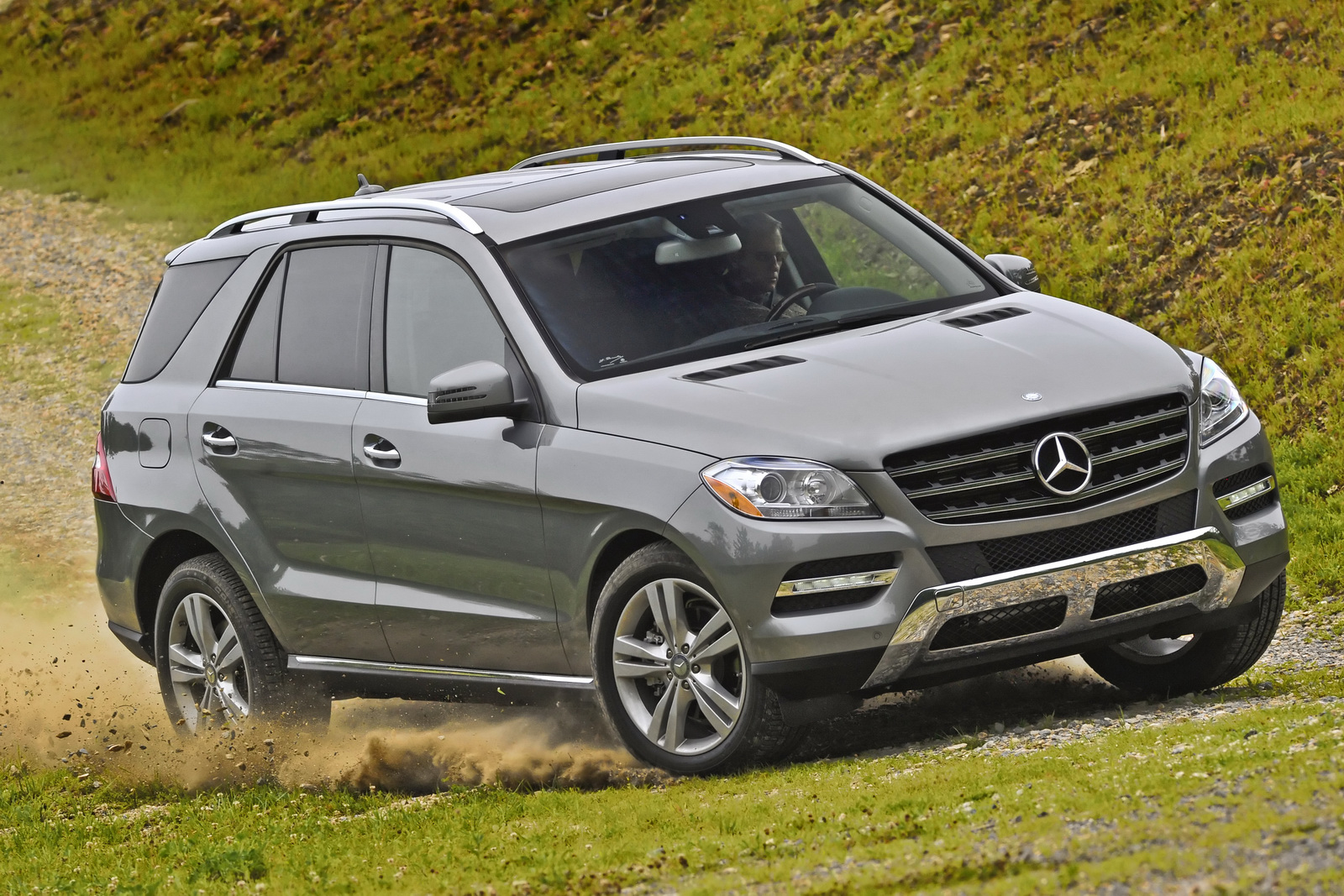
An imposing vehicle. No doubt about that. When I was in the car park a few days ago, my car was wedged in between the first and latest generation ML series vehicles. As I looked from left to right, I noticed that with time, the new ML was sharper, bolder, and undoubtedly bigger as well! From the front, the new ML bears the Mercedes-Benz crest upon a wide chrome front grill. Directly below, follows LED daytime running lights and a chrome underbody ‘battering ram’. ML diehards will say that the SUV looks rather similar to the new E-Class, failing to give it a ‘beefy appearance’. I beg to differ, for on a personal basis, the new ML imposes and dominates the roads making it rather ‘beefy’ enough for me. From the side, the SUV has a rather aerodynamic body, and is very avantgarde, with the use of sports rims, a nicely drawn curve on its side as well as the shiny roof racks and side stepping sills. At 4804mm in length, the ML definitely looks its size and manages to look like a GL from afar. From the rear, things get even sharper, with angular sides, hidden exhausts and beautifully crafted LED tail lamps. Overall, the new ML has a snobby feel about it, and redefines how a luxury SUV should look like from the outside, despite sharing a similar platform with the Jeep Grand Cherokee.
·            Interior
From a driver’s perspective, the vehicle’s high stance and large, multifunction steering wheel inspires confidence and accuracy in maneuvering the well-proportioned SUV. Turning away from the steering, the START/STOP button, telephony system, cruise control, PARKTRONIC and all the extra goodies, one realizes that everything—from the dashboard to the foothold areas all in contrasting colour stitch makes for a plush, comfortable and tasteful interior. Adopting Mercedes’ new tradition, a signal-like gear shifter is featured, though in a much simpler form. Flanking the top of the center console is the classic INFOTAINMENT system, plucked and revised from the E-Class. Unlike the E-Class though, the ML’s INFOTAINMENT system can feature a futuristic and clean-cut analogue clock when in idle mode. At the back, space is more than ample for 3 adults, with occupants guaranteed to ride in sheer comfort, due to the (optional) rear climate control adjustment, clear sound system and quiet ride. At the back, space is exceptional as well, due to the absence of third-row seating. Swathed in suede like material, simply sitting in the boot seems to be rather comfortable already. Of course, for the price you pay for the ML, an electronic boot comes as standard, making life much cleaner after an off road experience. In short, great, if not a superb interior surpassing that of a BMW X5, Lexus RX, etc.
·            Ride & Handlings
With a 3.5-liter V6 under the hood, the 306BHP powerplant does an effortless job in pulling the German built SUV forward. More relevantly, the 4MATIC 4-wheel drive system does a properly grippy job when shucked into wet corners on say, the coasts of Bristol. To be fair, the ML does shows signs of body roll—keep in mind the sheer size and dimensions of the SUV though. When talking about speed, the ML achieves 0-100km/h in a respectable 7.6 seconds, making cruising up to 3 digit speeds an ease. Mated to Mercedes’ renowned 7G-TRONIC gearbox, shifting gears is a seamless experience, be it through the automatic shifting or via the paddle shifters on the steering wheel. In addition, driver assistance systems such as BRAKE ASSIST, ATTENTION ASSIST PLUS, PARKTRONIC, and DISTRONIC PLUS, help to make driving the ML a rather easy thing to do.

·            Verdict
An improved model from the 2nd generation ML = better fuel economy, better drivability, fresher looks and a tastefully done up interior. Refined and comfortable, this is definitely the SUV to go for.

o    Pictures from:

Friday, July 13, 2012

Subaru BRZ 2.0, RWD, (A)


The BRZ/86 made its debut at the 2010 Tokyo Auto Show. Now, a good two years later, both the BRZ and the 86 have been launched. Being almost the same, we come to test the BRZ instead of the 86, just to see how the BRZ fits the bill.
·             Design & Engineering:
From the front, the BRZ sports a racing face. Angled headlamps, a large, almost Aston-Martin lookalike front grille, and multiple aerodynamic curves are etched into the Subaru’s face. Of course, this gives it a very masculine feel, and really appeals to a younger generation of ‘sporty drivers’ looking for an affordable sports vehicle. At just 1,300 mm in height, the BRZ features a low-slung silhouette typical of a sports car.  From the side, the wide front fenders seem to hide the 17-in wheels which feel a tad small for me. At the rear though, a sharp and sleek swooping rear back gives the BRZ a bit of a Lexus LFA feel—especially with the use of relatively large twin chrome-tipped exhausts. The clear tail lamps though, add an aftermarket feel to the BRZ. For die-hard Subaru fans, I believe that a BRZ STI kit should hit the markets soon. 
·            Interior
From the inside, one of the most notable characteristics of the BRZ’s interior is how driver orientated it is. From the grippy sports steering with paddle shifters, the large rev counter placed in the middle, rounded gear shifter, etc. In the center console, you get the standard, rather boring Subaru radio/FM/AM/CD player. That I must say, looks rather boring indeed. Directly below, lies the temperature settings—all kitted out with angular yet smooth brushed aluminium knobs. At the very bottom, lies the AUX-IN jack and the USB port for added comfort. On the right, one will find the start/stop button. Overall, I find that a certain level of attention has been inserted into this Subaru. Take the stitching for example. On the door panels, seats, steering wheel, handbrake, leg panels, etc, (test car leather came in black), contrasting red stitching was used in order to provide a youthful and sporty appearance and feel. At the rear, cup holders are there for rear passengers—most probably young kids or skinnier passengers. Such detail made me feel as if Subaru actually put some thought into making driving the BRZ an experience in itself, simply by sitting on the inside. As for boot space, rear knockdown seats come as standard, and can fit at least one golf bag in.
·            Ride & Handlings
Under the BRZ’S low, wide bonnet is a 2-liter Subaru boxer unit dubbed the FA. With the aid of Toyota’s D-4S direct injection system, the flat four churns out 200BHP. Despite not sounding sufficient enough for a lightweight Japanese sports car, the engine does its job rather well. Two transmission systems are available—a quick shifting manual and a more convenient 6-speed autobox. Obviously, the auto will not deliver as much performance as the manual and takes 8.2 seconds to get from a 0—100km/h, 0.6 seconds slower than the manual BRZ. Kick the Subaru into sports mode, and things can get even more enjoyable. Unfortunately, the 2.0-liter flat four is a naturally aspirated one, and loses out to competition such as the GTI. Nevertheless, as with all Boxer engines, the BRZ revs smoothly—quite nicely in fact.

·            Verdict
A cheap yet nicely fun model to drive—ignites the youthful spirit in one. Engine could be turbocharged, though we’ll have to wait for a (hopefully) STI version. Delightful. Simply delightful.

o    Pictures from: