Sunday, September 30, 2012

Audi Q3 2.0 TFSI


Competing head to head with BMW’s X1, we come to see how the new Q3 livens up the market.
·             Design & Engineering:
From the front, a rather futuristic face appears, with a waterfall-style grill in a brushed aluminum colour. Coupled with Audi’s new style of lights, the new Q3 really stands out from the pact. On the other hand, others may say that, “the Q3 seems to be a small sized Q5.” I say, “correct.” The Q3 stems from a large part, from its older brother, the Q5. This is not bad thing, mind you, for the Q5 is one of Audi’s most successful selling models. From the side, the Q3 takes a good stance—that of an urban SUV, partially due to a low roofline that provides the Q3 with a sporty feel. To fall along the lines of sportiness, the Q3 comes with 18, 19, and 20in rims, each marvelously sculpted. Of course, a S-Line package can be added on, providing the urban SUV with more aerodynamic parts. From the rear, a steep tailgate takes some cues from the A1’s bum—truly an architectural delight. A smooth ‘stainless steel’ underbody lines the underside of the vehicle; a touch that I quite like.
·            Interior
As I’ve mentioned before, Audi makes one of the world’s best mass-produced interiors. Clearly, the Q3 is no exception. From the driver’s point of view, the urban SUV leans closer towards the A1, and the new A3 (to be launched next year). Still, the steering wheel featured in the vehicle comes from the new A6. This mix and match of Audi bin parts surprisingly manages to blend together quite well. Sitting in the driver’s seat, everything seems rather well though out. For one, the aforementioned steering wheel is grippy and good to touch. Driving position is good, providing confidence and a good view. The center console comes directly from the A1, and thus includes a built in GPS system, SD card reader, etc. Coming with the S-Line package, the shift gear is sporty, with the S-Line emblem embossed right on the shifter head. To follow suit with the trendy style of customer individuality, the leather seats can be specified to match the colour of the SUV’s exterior. At the rear, an air-conditioning system pampers passengers, with the option to manually warm or cool the rear temperature. Knock down rear seats come as standard, making it easy to load bulky items in and out of the SUV. Still, I find that increased rear legroom would vastly improve the comfort level of the Q3. Overall, build quality is superb, with everything one would expect from the German marque, present.
·            Ride & Handlings
Paired to Audi’s familiar 2.0T four-pot, the engine is offered in 2 variants—a detuned 170BHP motor, and a 211BHP power pack. Despite seeming rather ‘small’ in power for a turbocharged SUV, even the 170BHP engine provides good low-end torque, and pushes seamlessly to the end of the rev. counter. Compared to its direct rival, the X1, even the base 170BHP variant is 20BHP more than BMW’s 150BHP X1 sDrive 18i. In addition, the Q3 completes the century sprint in roughly 2 ½ seconds faster than the Bavarian. For all variants, the engine will be mated to a twin clutch, 7-speed auto box—found in the RS3 and TTRS as well. Unlike the X1, which comes mainly in two-wheel drive, Audi’s signature Quattro system comes as standard on the Q3. Although most Q3 owners will never go off road, having Quattro on the urban SUV does provide for confidence, especially when driving around mountainous or coastal roads.    

·            Verdict
21st century styling, and incredibly sporty, the Q3 (especially when decked out with an S-Line kit) appeals to youths and all alike. Well-built interior, though rear legroom can be increased. Overall, the Q3 is a well-rounded vehicle and should be an instant sellout.

o    Pictures from:

Saturday, September 15, 2012

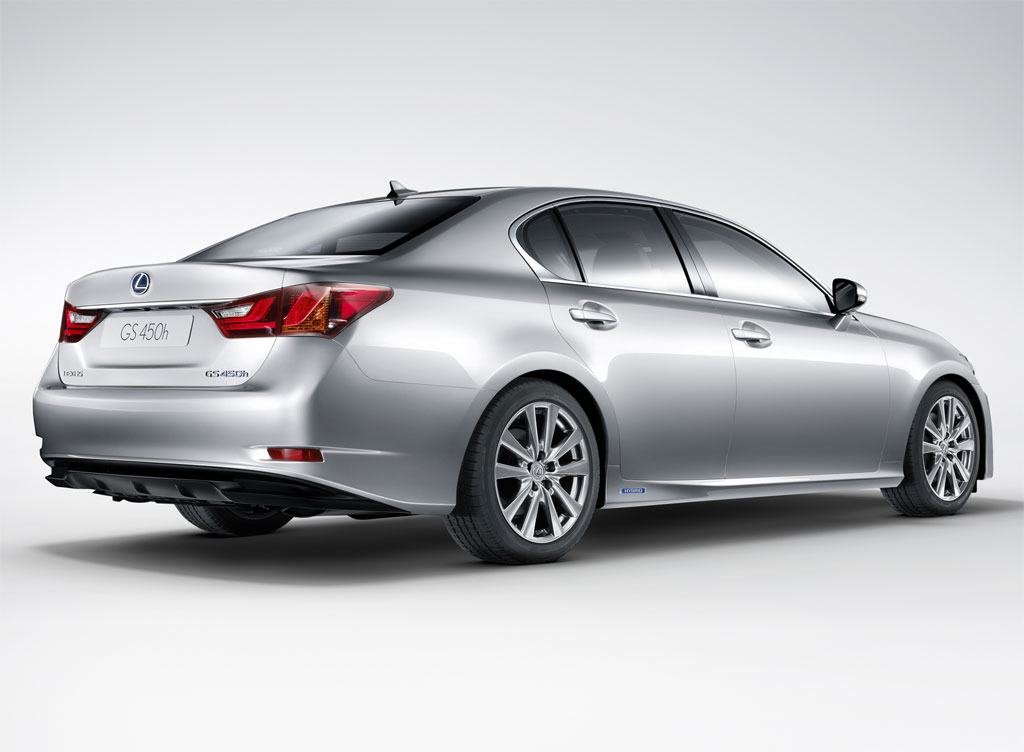
Lexus GS450h


With the new GS launched, the hybrid version follows right up its alley. We come to see how well it does.
·             Design & Engineering:
From the front, the usual GS shines through—meaning quality, reliability and comfort. In addition, Lexus’ new spindle grill design ventures into the hybrid, allowing for a more futuristic and masculine appearance. Of course, the hybrid blue Lexus badge takes the place of the traditional badge. Being the top of the range trim among the GS lineup, the hybrid (varying from country to country) comes standard with the F-sport trim, the F standing for Japan’s acclaimed Fuji Speedway. From the side, Lexus’ L-finesse statement carries through, exuding aero dynamism topped off with the automaker’s environmental sense due to the blue hybrid badge on the sides. From the rear, I especially appreciate how Lexus has paid so much attention to detail, in order to conceal the exhausts, while at the same time adding a dark coloured plastic piece to help with the aerodynamics of the vehicle, and to ‘replace’ the hidden exhausts. Very clever indeed.
·            Interior
On the inside, Lexus’ forte at attention to detail is clearly shown, through the use of one rather simple element—wood trim. Though the interior is almost identical to the rest of the GS lineup, Lexus uses bamboo. You heard me. Bamboo. According to Lexus, it allows for a more eco-friendly feel and look. To me, it seems like an imitation traditional Japanese spa—with the use of dark supple leather and bright bamboo wood. I particularly adore two things about the GS’s interior—hybrid or not. For starters, the extensive use of grain-soft leather which covers almost every imaginable surface. As for the final number, the humongous center console screen featuring the navigation system, audio, hybrid, drive mode, etc. In addition, the revolution counter on the speedometer can change, when toggled between sport and the rest of the modes. Engage to sport mode, and the hybrid meter snaps to a rev. counter, allowing for one’s sporty nature to come alive.
·            Ride & Handlings

      Lexus’ 3.5-liter V6 pairs with a pair of motor generators and batteries, making up the hybrid system. Combined, total output amounts to an impressive 345BHP, 6 more than its predecessor, and 5 more than its competitor, BMW’s ActiveHybrid5 (see previous articles). With the F-sport suspension setup, the century sprint can be achieved under 6 seconds, with the engine truly opening up once past 45km/h. As expected, wind intrusion and road noise is kept to a minimal, with audiophile approved Mark Levinson speakers supplementing the only ‘noise’ throughout a journey. Since we’re talking about a hybrid, I guess it’ll be good to know that the GS450h is capable of hitting 6.2 liters of petrol/100km traveled. That’s good stuff.

·            Verdict
Sharp and masculine looks; even more quiet that the rest of the GS lineup. Bamboo interior might come off as a bit tacky though… Great suspension and ride comfort—superb performance on the go as well. Looks like the hybrid market just got a bit more interesting.

o    Pictures from:
http://www.leforse.com/photos/lexus-2013-lexus-gs-450h-engine-2-of-2013-lexus-gs-450h_4314.jpg


Saturday, September 1, 2012

Volkswagen CrossPolo (1.2 TSI) (A)


A new member to the Polo lineup arrives. We come to see how much of a success it is.
·             Design & Engineering:
From the front, you get your usual Polo. Choose a bright and funky colour. Say, flash white, or bright orange for example. Raise the whole car up by 15mm; add a brushed aluminum plastic bottom, so as to make the front of the car more pronounced. At the side, throw in rims, which fill the expanded arches. Paint the wing mirrors the colour of brushed aluminum. At the rear, extend the same, brushed aluminum bottom that carries to the back, from the front. That’s what the CrossPolo is like. Did I mention the roof racks on top? In short, the CrossPolo is sportier and slightly more masculine than the standard Polo, or even (dare I say) the Polo GTI. Keep in mind that this minute vehicle is not one to take to the lush rainforests of South America. Thinking of bringing this to the beach would be cruel as well. The CrossPolo fits perfectly well at home—deep in the heart of the city.
·            Interior
Standard Polo. Though, as the whole vehicle grows just a tad bit from the standard Polo, a height increase means that passengers in the rear will find the VW slightly less claustrophobic than before. Subsequently, the raised height means that the driver is treated to a wider and more commanding road view, also partially due to the up-close windscreen design. Despite growing in size and character, the CrossPolo still remains relatively low on the VW hierarchy. This means that equipment such as Bluetooth, built-in GPS, and such (usually found on higher spec Golf models, the Tiguan, the Eos, etc.) don’t venture down into the entire Polo range. Still, soft touch and high quality materials make up for the loss of such goodies. In addition, that same funkiness from the outside continues into the vehicle through the use of exterior colour matching seat stitching. This added touch allows for a sense of individualism and faint luxury, as such attention to detail is usually found on larger luxury barges. Note—a couple of Volkswagen models recently won awards for having outstanding mass-built interior quality.
·            Ride & Handlings
Using the same 1.2 TSI engine taken from the Polo Sport, the same 105 BHP finds itself at the heart of the CrossPolo, allowing the crossover to complete the century sprint in just under 10 seconds. Though it sounds rather slow and sluggish on paper, the smooth DSG gearbox allows for swift yet fuel-efficient gear changes. Due to a suspension tweak, the crossover doesn’t disappoint—keeping things rather neat and tidy.

·            Verdict
Overall, a cheap and fun alternative to compact hatches—with that extra bit of spunk and youthfulness to it as well. Though rather unlikely, I’m hoping a CrossPolo GTI comes along, allowing the CrossPolo to appeal to ‘speed demons’ as well.

o    Pictures from:

Saturday, August 25, 2012

Sunday, August 19, 2012

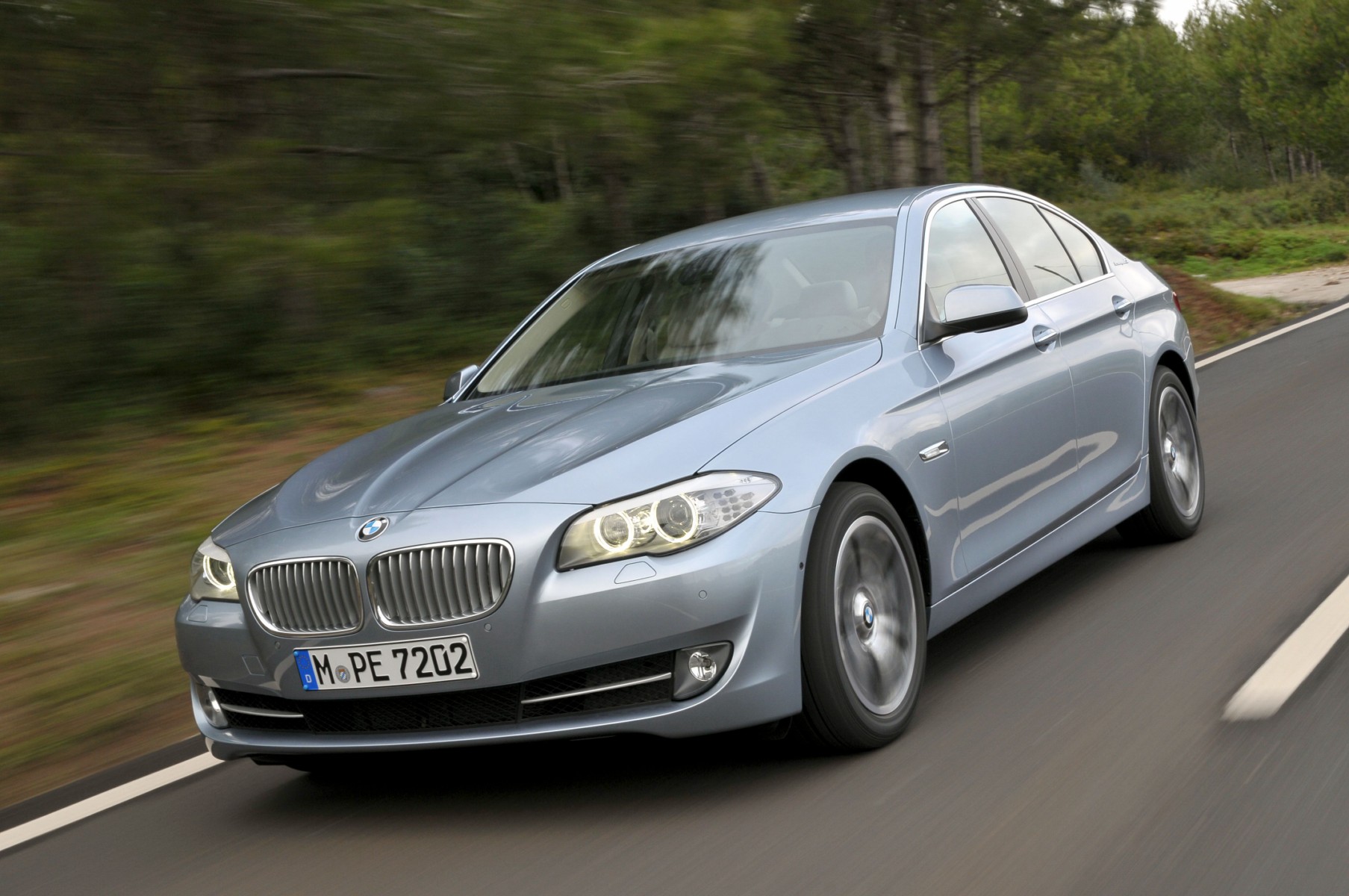
BMW ActiveHybrid 5


With the concept of ‘downsizing’ for eco-friendliness becoming a rather popular one, BMW takes the other road—adding a hybrid battery pack to its ever popular, twin-turbo 535i. We come to see how this new and appealing model integrates into today’s eco-friendly environment.
·             Design & Engineering:
From the front, the ActiveHybrid (let’s dub it the ‘AH’) is hardly any different from the model it is based on—the 535i. Look closer, and notice that the chrome kidney grills are replaced by galvanized ones instead. A further inspection reveals louvers placed neatly behind the grills, depicting the attention to detail placed into revising the AH, vis-à-vis aero dynamism and fuel efficiency. From the side, 17-in, 5 spoke wheels—unique to the AH model, provide aero efficiency. Still, I find that the rims look rather gaudy as they take away that special sense of sportiness found in the rest of the 5-Series lineup. At the rear, nothing changes apart from the removal of say, 535i, to ActiveHybrid 5. For amateurs, the main distinction between a normal 5 and the AH would be the obsessive use of ActiveHybrid 5 badges plastered all over the vehicle, indicating the eco-friendliness provided by the Bimmer. 
·            Interior
As usual, one gets the usual luxury treatment from BMW—paddle shifters, a telephony system, the award-winning i-Drive, and the lot. If one were to take say, a 523i, and throw in a passenger, the only noticeable difference from a passenger’s point of view between the 523i and the AH, would be the ActiveHybrid 5 badge placed right behind the 8-speed gear shifter. At the rear, passengers are still spoilt by the presence of 4-zone climate control, and enjoy ample head and legroom while settling into lush leather seats. Of course, the addition of the battery pack reduces boot space. Nevertheless, it still manages to provide ample boot space for everyday use. One thing fantastically bizarre about the AH, is the comfort access boot feature. Now featured on models such as Audi’s A6, a wiggle of one’s foot (with the key nearby) under the boot area allows the boot to flip up and down—all via BMW’s superb comfort system.   
·            Ride & Handlings
With the addition of 220kg, the AH gives out 34BHP more than the 535i, providing a lively and quick feel on straights. Mated to a smooth 8-speed gearbox, gearshifts are seamless and smooth. In Comfort Plus mode, the AH smoothens out almost all the imperfections on A or even B roads, allowing for comfortable driving at all times. One thing to point out is that when driving around town under the presence of orange, green and red lights, shudders from the engine switching between the electric motor and the petrol engine can be felt.

·            Verdict
A properly sized hybrid, capable of providing speed, comfort and eco-friendliness. Personally speaking though, I would opt for Lexus’ GS hybrid, as the Japanese have been selling and improving their hybrid systems far longer than BMW has.

o    Pictures from: