Thursday, April 12, 2012

Infiniti G37


Having branched out from Nissan to become a luxury brand, we come to see how the G37 convertible stands up to meet the expectations of the Japanese luxury segment—one currently dominated by Lexus.
·             Design & Engineering:
In a statement from Infiniti, the company stresses that they shape their vehicles in sync with what nature provides. For instance, the G37 convertible has a pleasing exterior form, fitting very well indeed against the backdrop of the bay, or other symbolic areas of nature. This has to do largely with the styling of the sheet metal used. Clearly, we can see that the designers at Infiniti have really put in effort, for the vehicle has a rather natural, and somewhat well balanced stance. From the front, the nose bearing the Infiniti badge amongst the grill protrudes outward, flanked by bi-xenon lights (which come as a standard option). Being the premium cut, optional luxuries found on rivals come as standard, such as headlight washers. From the side, the convertible transforms itself from convertible (three-piece hardtop) to coupé in a mere 25 seconds—though operation is only engaged when the vehicle is stationary. No matter, at whichever form it takes, the G37 manages to look graceful, as if of royal descent. Of course, ‘paltry’ features such as a smart key system come as standard, engaged via a button on the handle. From the rear, two chrome tailpipes emerge out at the bottom, obviously not in chrome, as such an attention seeking detail would be considered a designer faux pas. Additionally, the luxury Japanese marque also sports a chrome rear boot-lid which houses an integrated high-mounted brake light, as well as a parking monitor system camera which of course, comes as standard.

·            Interior
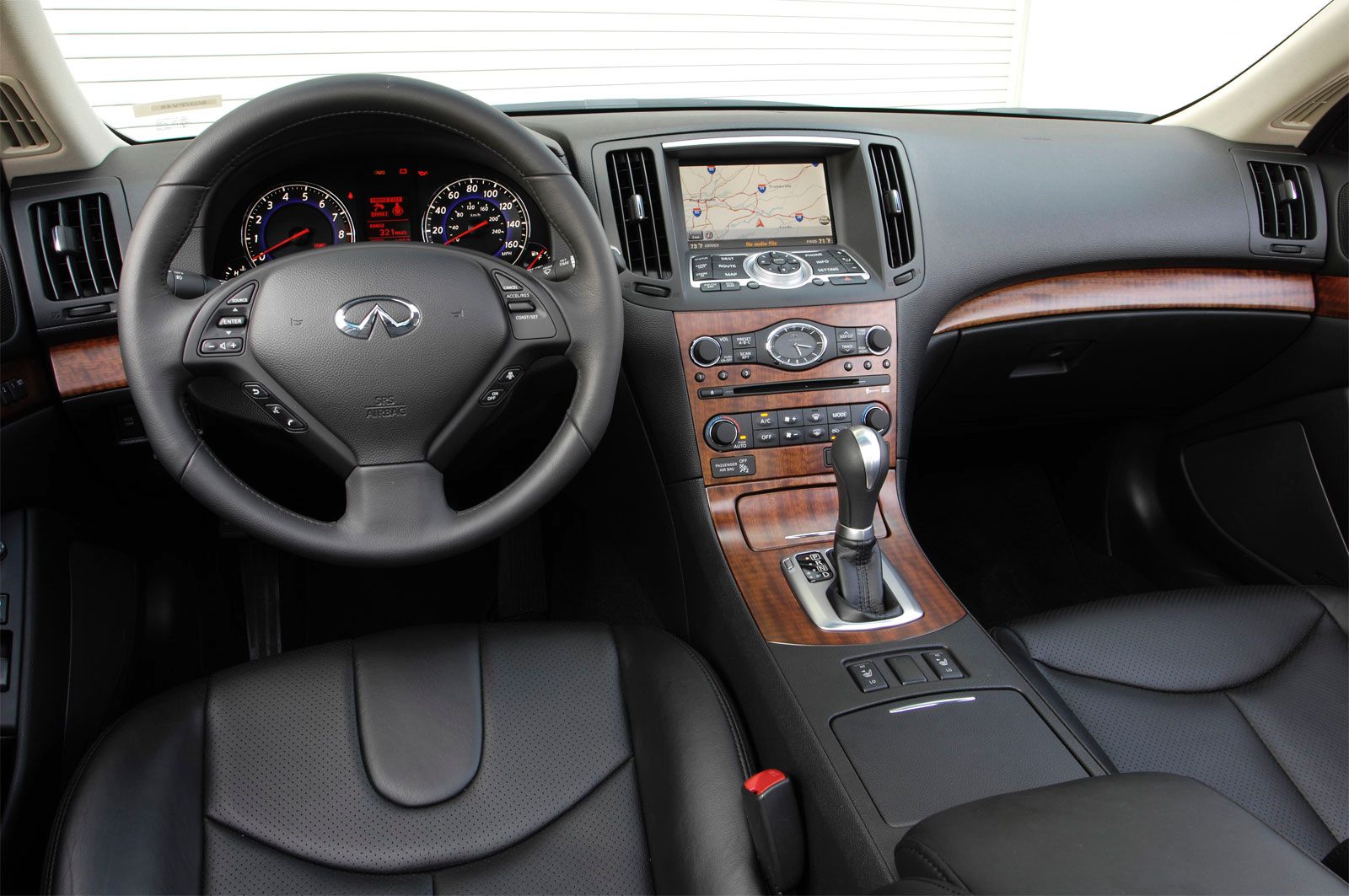
Keep in mind. The cost. Of course, as a convertible targeted at the luxury segment, what you pay is what you get. Thus, the luxuriously appointed interior is clean and clear, and exudes a suitably expensive look. From the driver’s side, a thick yet somehow sporty three-spoke leather steering wheel featuring an array of buttons literally overcrowds the wheel. For that extra touch, magnesium paddle shifters allow quick shifting and easy transitions into the silky smooth gears. As for the speedometer, outlined in an icy dark blue, and with a top speed of 280km/h, an LCD screen displays all the essential information needed for successful driving. In the center console, a large 7-inch multi-information display monitor uses a clear colour screen (taken from more expensive Nissan models) displays the radio, CD player, telephony system, GPS, etc. As for the sound system (as Lexus has Mark Levinson), Infiniti shoots for the best—a Bose surround sound system dominates the interior, and integrates itself into the front headrests as well. As for the premium leather seats, an Infiniti badge is sewn into the front seats, which come with heating and cooling, as well as electrically adjustable seats. Around the gearshift area, the button for the hardtop sits comfortably in between the seat temperature settings. At the rear, despite having an incredibly long wheelbase for such a convertible in its segment, the rear seats fit two adults—though for journeys no further than a run from the country club back to the office.
·            Ride & Handlings
As its name suggests, the G37 houses a 3.7-liter V6 engine, one taken directly from Nissan’s 370Z, and when mated to a 7-speed gearbox, produces 320 BHP, with the century sprint completed in 6.7 seconds. Despite being half a second slower than BMW’S twin-turbo charged 335i, the G37 weighs in at nearly 1.9-tonnes. Regardless of one’s driving style or personality, when piloting the G37, one can drive like a mad man, or can take to the shops in a comfortable, classy style. And indeed, it is a swift, and refined vehicle, clearly defining the words luxury. Then of course, needless to say, road noise and wind noise are kept at a bear minimal, with the burble of the hefty V6 heard in the background.
·            Verdict
Subtle hints of its hidden power and the luxury as to which it beholds from the outside, with a richly appointed interior. However, despite trying ever so hard to fit into the luxury segment, I still find that Infiniti simply tries just a tad to hard. Thus, if one sees the G37’s powerful V6 as an attractive bait, I say, why not go for the cheaper, more hardcore Nissan 370Z? If not, you’re still better off heading off over to Lexus.

Sorry Infiniti. Next time then.


o    Pictures from:

Friday, April 6, 2012

Good Friday

Hi all,

As it is indeed Good Friday, I shall be taking a 'post off', in addition to celebrating a birthday over the weekend.

Enjoy the week ahead, as well as the rest of April!

Best,

CSI

Sunday, April 1, 2012

Good to Buy… Now!


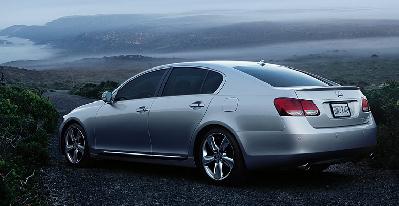
The Lexus GS 300 has been around since 2005. The mid-executive sedan features a potent 245 BHP, silky smooth V6. Acres of wood flank the interior of the L(luxury)eus GS300, with the option of birds eye maple, maple red, etc. In addition, the finest quality leathers along with two-tone interior colours provide the interior with a sense of a no-nonsense, yet cozy feel. In addition, a touch screen center console provides up to date information, and is rather easy to use. For that extra luxury measure as to which Lexus always strives to achieve, a standard 14-speaker, Mark Levinson surround sound lies within the interior, providing clear and rich sounds to resonate throughout the cabin.   
·             2013 Lexus GS 350:
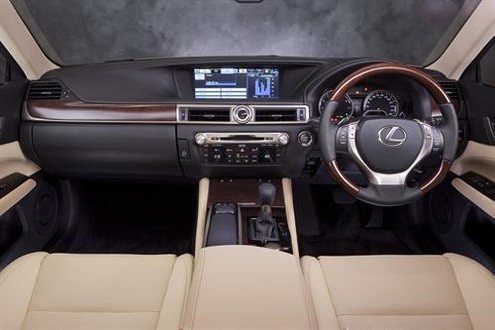
The new, soon-to-debut-in-markets GS350 sports the same face as the new CT200H. LED lights and Xenon headlamps nestle sharply into the vehicle’s face. From the side, the clear glass windows are outlined with chrome, and seem to elongate the executive saloon. From the rear, LED’s once more flank the sides of the boot, with twin, rectangular chrome tailpipes neatly built into the bottom sides. On the inside, a large, leather wrapped steering wheel with wood trim features multiple control buttons for the stereo, etc. As for the center console, a new system featured in the RX and CT model with Remote Touch, makes its debut in the new GS as well. For that extra luxury touch, the designers at Lexus have sewn into the center console; a traditional watch face clock (which matches any interior colour combination; featured in the GS 350, Flaxen leather trim, linear espresso wood, etc.) outlined in brushed steel bears itself proudly and elegantly. Once more, a Mark Levinson surround sound buries itself into the interior, providing for sharp and clear surround sounds. With the new GS, luxury has been taken up to a higher degree, with doorsills, the dashboard, and every other imaginable surface wrapped up in high-quality leather. At the rear, the rear armrest features buttons that control individual passenger temperature as well as seat temperature, stereo functions, etc.

In short, why the rather misleading title, alongside the lengthy paragraph describing the new GS?

So, lets cut down to the chase.

If you’re looking for a luxurious ride with ample space, decent fuel economy, and one sleek looks, head down to your local Lexus dealer, or to an authorized used Lexus dealer. Best to grab ‘em before the new GS heads to town.

o    Pictures from:
o    http://images.usedcheapcars.org/used-lexus/2006-lexus-gs-430-sedan-lexus-4-3l-8-cylinder-premium-automatic-s6/112_0505_firsttest_04z_2006_lexus_gs_300_sedan_interior-ucc.jpg
o    http://www.carsplusplus.com/pictures/2010/115932/photo.jpg
o    http://www.motorward.com/wp-content/images/2011/11/2012-Lexus-GS-250-3.jpg

Thursday, March 22, 2012

BMW M5


The M5’s lineage can be traced back to 1980, where it took the crown of being the fastest production car in the world. Over three decades later, we come to see how the latest M5 has evolved over time.
·             Design & Engineering:
From the front, BMW’S M division has taken extra measures to add looks of aggression to the vehicle. M3 like air intakes, M-styled black double kidney grills, flared wheel arches, M-signature ‘gills’, specially-styled wing mirrors, quad exhausts, 20-inch double spoke alloy wheels, and a subtle boot lid spoiler help to provide an inner fire for the M5. In addition to 20-inch rims, gargantuan brakes and blue calipers merge couple perfectly with a lowered suspension, providing for a purposeful stance. As always, the signature ‘M’ logos are hidden in nooks and crannies, adding towards a more ominous and sinister feel.

·            Interior
Already, the standard 5-series provides a tasteful, comfortable, and refined interior, edging it ahead of fellow German marque. With the M5, the standard 5-series cabin has been dressed up ever so tastefully and rather, verbosely as well. For instance, the cabin features bespoke M Sports seats, Merino leather upholstery, Aluminium Trace interior trim strips, as well as a BMW Individual roof liner in Anthracite (or specified to your taste). Up front, a 330km/h speedometer that still uses classic BMW M circular dials with red needles and white illumination sits gracefully above the blue and red stiched leather steering wheel. The steering wheel features multiple commands that operate the cruise control, radio, telephone, and so on. On the left side of the wheel, two M buttons which can call up pre-configured settings for the car rest proudly on the wheel. Such settings are configured through the easy to use i-Drive system, which also allows one to set the information displayed on the Head-up-Display. Being the crème de la crème of the 5-Series range, oodles of customization and personalization can be offered, though as always, at a cost. For instance, the test car featured cherry/tomato red Merino leather, with an Anthracite roof liner. That could be changed to say, Merino leather in deep sea blue with beige stitching and a warm champagne coloured roof liner in suede. At the rear, being the best of both worlds, the M5 offers space for a family of five, with three adults able to fit comfortably in the rear seats, lined with expensive leathers. Compared to its predecessor, the M5 features a rather versatile suspension, and unlike the previous M5, does not hurt your back or realign your bones after going for a trip to the store.    
·            Ride & Handlings
For years, BMW M Division vehicles have only used naturally aspirated engines. For the first time in automotive history though, BMW has decided to implement a smaller, 4.4-liter turbocharged V8, which still produces a whopping 560BHP—10% more power than the previous M5. This new engine is also more powerful than Mercedes’ AMG turbocharged 5.5-liter V8 featured in the M5’s rival—the performance pack E63 AMG. Though this twin-turbo charged engine does not rev as high as the previous model, the engine still produces soul-stirring grunts and howls, when revved above 4000 RPM. This is where BMW cheats. Sorry. This is where automakers such as Porsche (with the new 911) cheat as well. In the same style of the new 911’s Sound Symposer, as the new M5 will never sound as intoxicating as the previous M5’s naturally aspirated V10, more of the new M5’s exhaust note is filtered into the cabin via surround sound speakers. To make up for such sneaky tactics, the gearbox in the new M5 is now a more contemporary, more efficient, and quicker shifting M DCT Drivelogic dual clutch unit. This allows the driver to select the sportiest, relaxed, or efficient driving styles, all via a rocker switch. In addition, launch control now becomes a standard feature.
·            Verdict
Overall, the new M5 features the latest in automotive engineering and technology, coupled with comfort, looks, and everyday practicality as well. Despite facing stiff competition from Mercedes’ E63 AMG, Jaguar’s XFR, and (soon-to-debut) Audi’s RS6, the new M5 still claims the top spot—just as it has been doing since 1980.

o    Pictures from:
http://www.autopartmodif.com/wp-content/uploads/2011/09/2012-BMW-M5-Pictures-Seats-Interior-Design-9.jpg   

Friday, March 16, 2012

Porsche 911S (model type 991)


As promised from some time before, with the actual release of the new 991, we come to see how Porsche’s classic trophy prize has upped its game.
·             Design & Engineering:
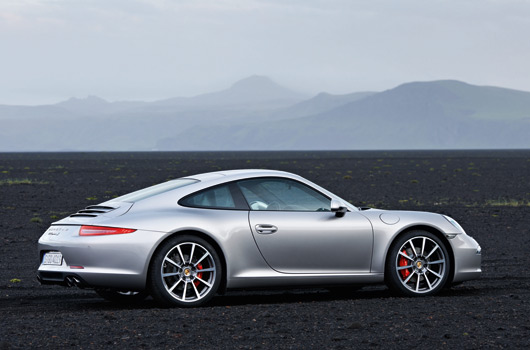
Compare the 997 with the new 991, and be amazed—amazed at how little has changed on the outside. The same headlamps are in place, simply with added LED’s, and sharper curves. As always, the trunk sits up front, with the same three grills directly beneath it. From the side though, slight changes such as the 100mm longer wheelbase, shorter overhang and lower stance become apparent, providing the 997 with a sleeker and more appealing appearance. The rear perhaps, then becomes the most obvious change to the 997. For instance, LED slits have appeared, replacing conventional light bulbs. The seven letter P O R S C H E logo now bears itself proudly on the vehicles bum. In addition, the large, active rear spoiler is now separated from the smaller engine cover. Overall, though the 991 sports a more modern stance, and has a stronger sense of purpose. Currently, only the Carrera and Carrera S models, both in coupé and convertible form are available in the market. Be on the lookout for the upcoming Turbo and GT3 models appearing at a later stage. (The base Carrera as tested can be differed from its by no means ‘lesser’ sibling, through its 20-inch rims and twin, circular tail pipes on either side, as opposed to having single oval shaped ones.)

·            Interior
Porsche claims that the new interior featured in the 991 (good riddance to the rather drab one featured in the 997) has been inspired by the Carrera GT. I prefer to say that the interior has simply been plucked from the Panamera, to the Cayenne, and now the 991. Indeed. From the driver’s point of view, the interior is an absolute joy. The steering wheel is grippy and well rounded, with paddle shifters available as standard (on the Carrera S) model. The dashboard features the same classic Porsche instrument panel, though it now sits against a charcoal gray background. A new feature from the 991, is the new 4.6-inch TFT colour screen which sits amongst the instrument panel, displays essential information such as trip computer, audio system, navigation, G-force meter, track timer, etc. In addition, a large colour screen sits comfortably in the center console, flanked by a myriad of buttons. If the Sport Chrono package is selected, a Sport Plus button comes along with the package, bringing with it lively accelerations, and beautiful noises. PDK transmission, along with the majority of the new Porsche lineup (from Panamera onwards), comes as standard on the 991, allowing for superb transmission shifts. Sticking to its classical heritage, the 991 still uses a classic key fob, avoiding any cumbersome, intelligent smart key. At the rear, space is still ever so tight—with room perhaps for youngsters and perhaps infants. Above 1.6-meters tall? Forget even trying to get to the rear. On the whole, the interior sports increased quality build along with the use of expensive leathers. Combined together, the new 991 seems as if it has an interior worth a million dollars.
·            Ride & Handlings
The Carrera S features a 3.8-litre flat six, which produces 15BHP more than the 997S. Select ‘Sport’ mode, and the engine roars to life, surging ahead of competition. Imagine what ‘Sport Plus’ does to it. Despite the extra power, the new Carrera S is more economical, and emits less CO2 than its predecessor.
·            Verdict
Incredibly amazing, much improved, on the whole, a better experience. As for the price tag? Then again, whatever you pay for the new 991 will give you an interior worth a million dollars, and looks handsome enough to stop traffic. 

o    Pictures from:
http://www.porsche-mania.com/wp-content/gallery/2012-porsche-911-carrera/2012-new-porsche-911-carrera-interior_05.jpg

Wednesday, March 7, 2012

The Car Market

As economic powers such as China and India arise, we see how such an issue at hand relates to one matter--cars.

India:

For years, means of transport has meant train, bicycle, foot, etc. Apart from their first attempts at making vehicles, only one has truly emerged as a global player. Tata-- originally a car maker specific to making cheap and practical cars for the every-day, mass-market indian family. With much success locally, this has allowed the brand to become synonymous with two well-known, British players. Thus, Tata is now synonymous with Jaguar and Land Rover/Range Rover, as the proud owner of such established brands. And indeed, things are going well! Look at Jaguar, with new models such as the CX-16, XK-R, XF, and XJ-- all models which were released after the changing of ownership to Tata. As for Range Rover, we have the new Evoque, with even more promising models to follow suit,

China:

Multiple CEO's of major luxury brands, such as Rolls-Royce, and Bentley (to name a few), have acknowledged the fact that the Chinese market accounts for large numbers of their sales. Therefore, you have special editions of Rolls-Royce's, Bentley's, and Lamborghini's, tailored specifically to the Chinese taste, all for gastronomical prices. With the Chinese car market still inflating, we can expect to find even more luxury brands tailoring to their market.

Friday, March 2, 2012

Subaru XV (Premium)


A cheap and completely new crossover from Subaru—think of a smaller Forester, with Citroën DS3 styling thrown in. 
·             Design & Engineering:
Instantly, one can see that the XV appeals to the slightly younger generation, with bold accents (so as to say), bright Japanese colours, and custom designed rims. From the front, the XV bears the classic Subaru chrome grill, as well as a rising bonnet—designed so as to house Subaru’s signature boxer engine. From the side, the XV has a bug shaped design, with the rear sweeping just as the previous Impreza hatchback had. At nearly 4.5 meters long, 1.8 meters wide, and 1.6 meters tall, compared to many of its competitors, the XV has better road presence than many of its competitors. What is more noticeable is the 220mm of ground clearance, truly giving off hints of the XV’s off-road abilities. In addition, the uniquely styled two-tone 17-inch rims give the Subaru an individual touch. From the rear, the XV has rugged features, and sharp edges—nothing too spectacular. Note to reader—below the Subaru badge, the well-respected AWD badge bears itself proudly. Unfortunately, the XV, though uniquely styled seems to be stuck in time, with no hints to any signs of modern touches. For instance, the lack of LED lamps.

·            Interior
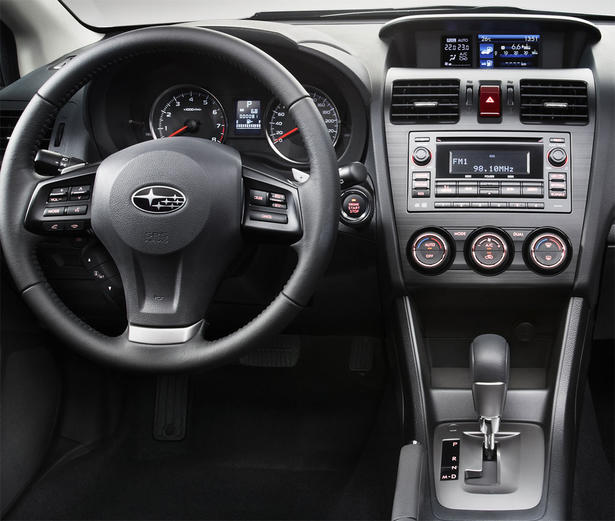
On the inside, though versatile and practical, the interior, clad in low-grade, black leather, seems rather drab. Being the premium model as tested; the XV features a start/stop button, as well as a leather steering wheel with multiple functions, such as a Bluetooth telephony system, and cruise control. The speedometer features chrome dials, as well as a good looking and modern, odometer. I must admit, that despite the rugged and rather drab interior, the premium XV model features a rather useful center console, outlined in evergreen, brushed aluminium. For instance, dual-climate control is available, with a boring, but practical CD/tuner/AUX-IN/USB/wireless audio streaming for smart phones. In addition, the system allows one to pair a telephone via Bluetooth. Directly above it, a 2-dimensional full colour screen features climate for both inside and outside, fuel range, as well as a rather smart system monitoring tire pressure and energy distribution to all four wheels. Being the premium model, the XV also features a sunroof, as well as a built-in reverse camera. In addition, a rather ‘grippy’ transmission shifter, clad in leather, and with a +/- manual shifter comes as standard. At the rear, a bench-styled seating sits three rather snugly—though larger passengers may find leg space to be a slight issue. Nevertheless, the XV provides an airy and rather spacious cabin as compared to competitors. As the rear comes hatchback style, boot space fits the average grocery run, but with the rear seats down, fitting in golf bags and skis becomes a rather easy task.  
·            Ride & Handlings
Made of lightweight material, the 2.0-liter boxer engine delivers 150HP, which tugs the crossover along with ease. However, despite the AWD system, overtaking becomes a rather harsh task, with sluggish performance at times. As the XV is mated to a rather noisy CVT transmission, cabin noise is apparent, even when compared to other models in the lineup, such as the Impreza. Keep in mind though, that despite bearing an AWD system and a rather tall stance, the XV is not one to bring along on rough terrain and harsh condition, but more for going up the mountainous roads of Japan and Europe.
·            Verdict
Not bad for a first shot in this segment, though with much room for improvement. With a rather drab but practical interior, as well as the rather ‘young-looking’ exterior the XV might not appeal to all. Though, the low price tag might.

o    Pictures from:
http://www.zercustoms.com/news/images/Subaru/th1/Subaru-XV-3.jpg